

Surajmal Shobhachand supplies screen-printed T-shirts, hoodies and sweatshirts from India for clothing brands. Send the garment, artwork link and quantities for a quote.
Screen printing is also called silkscreen printing. A stencil blocks parts of the screen and leaves others open for ink to pass through.
Screen-printed garments we supply
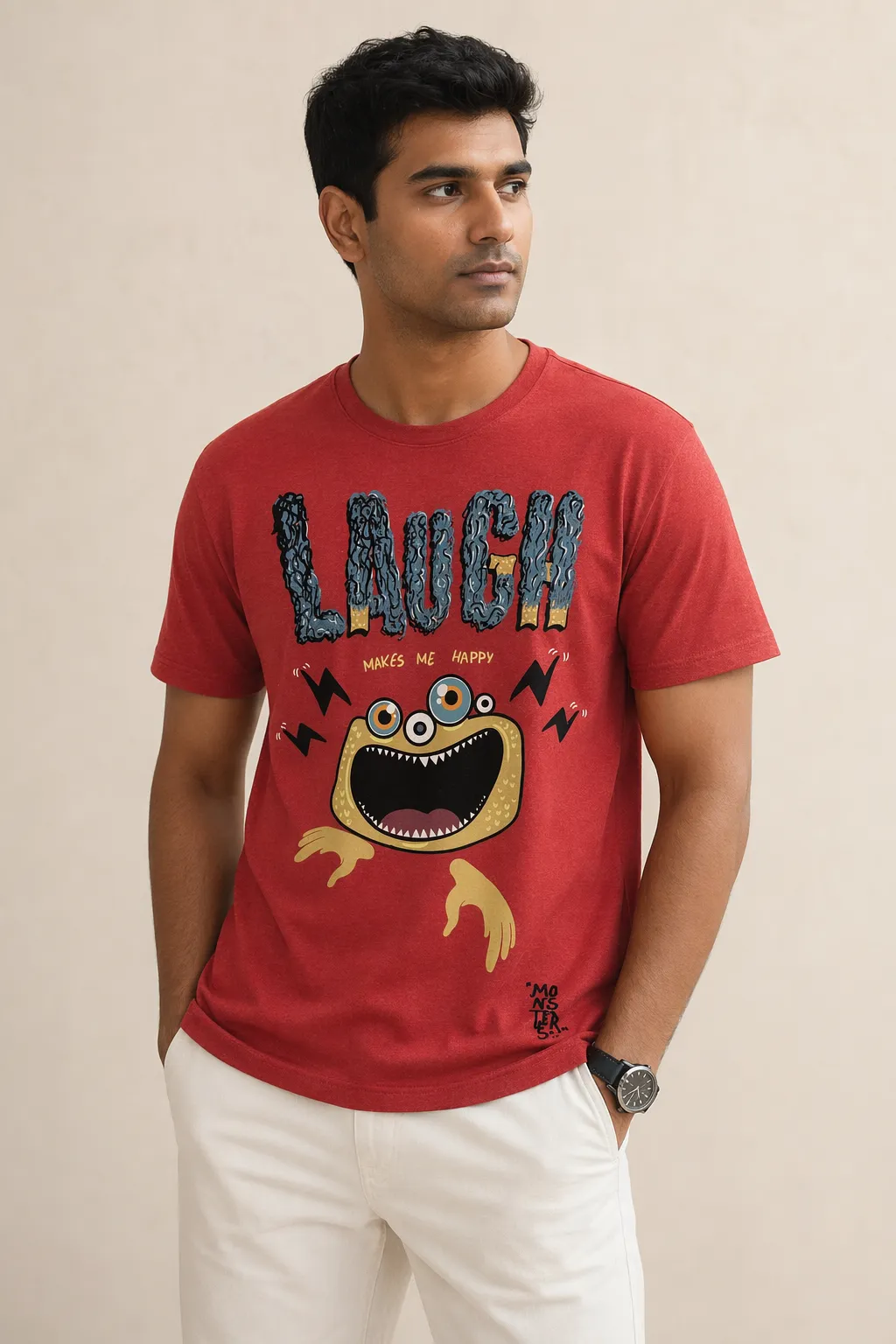
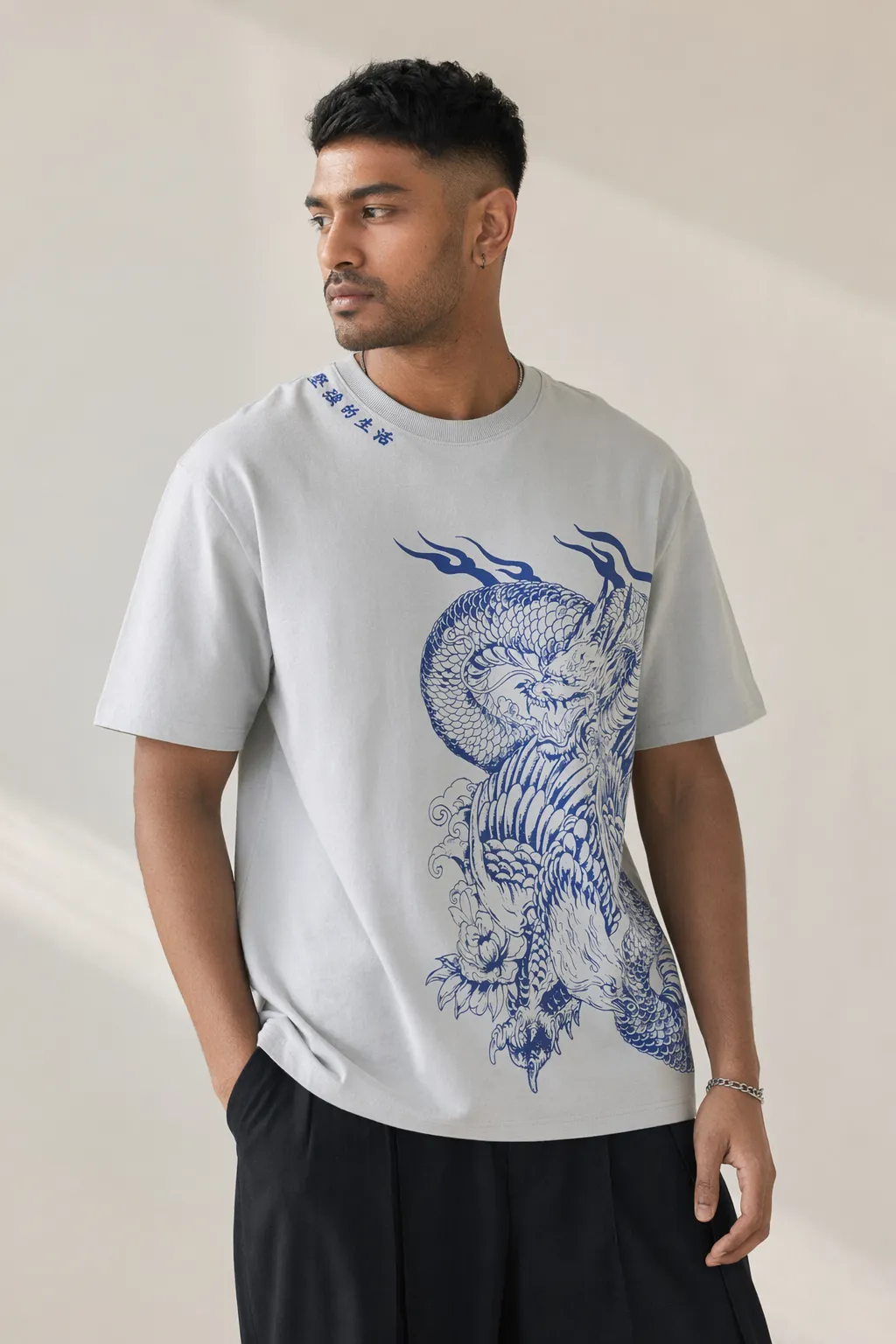
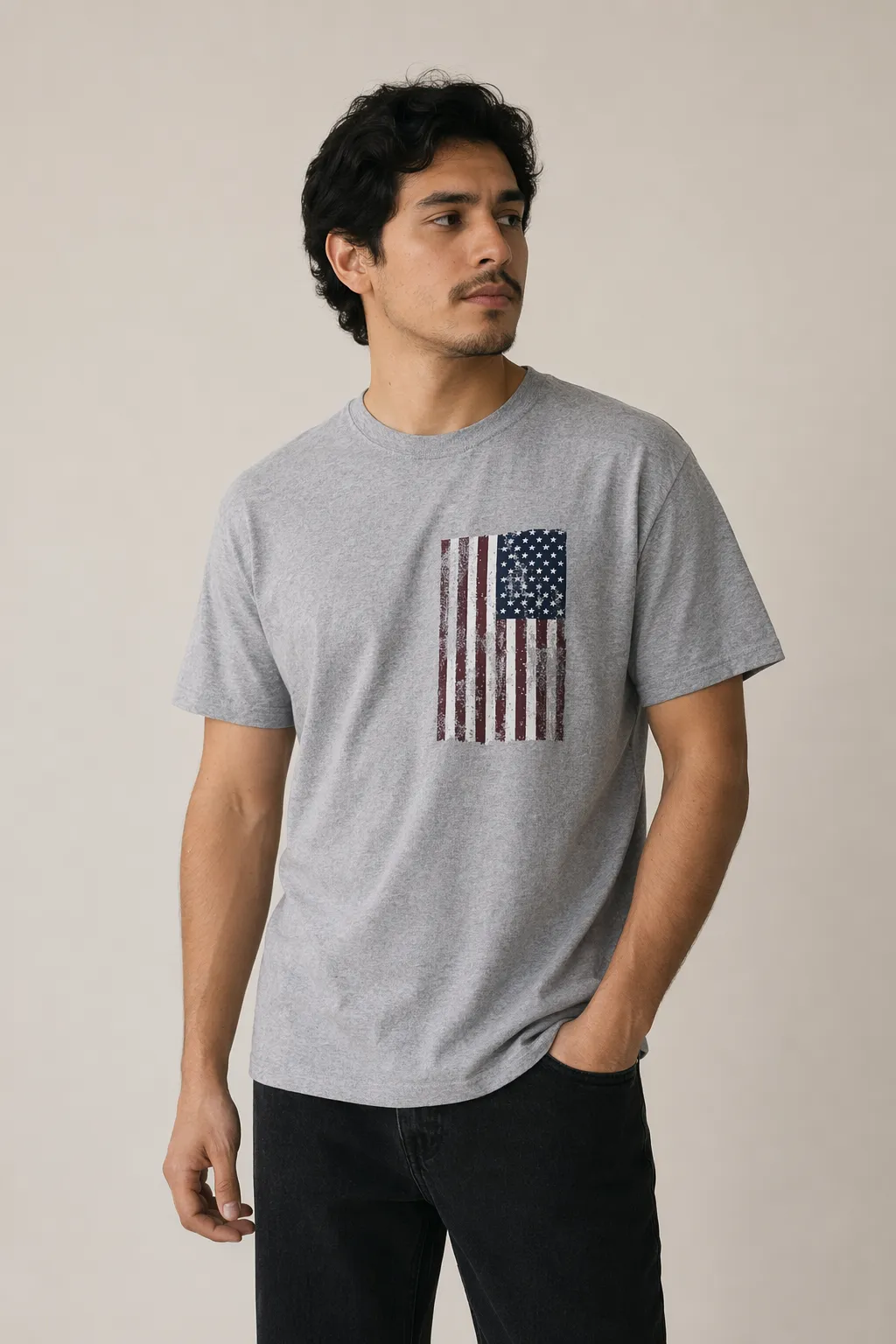
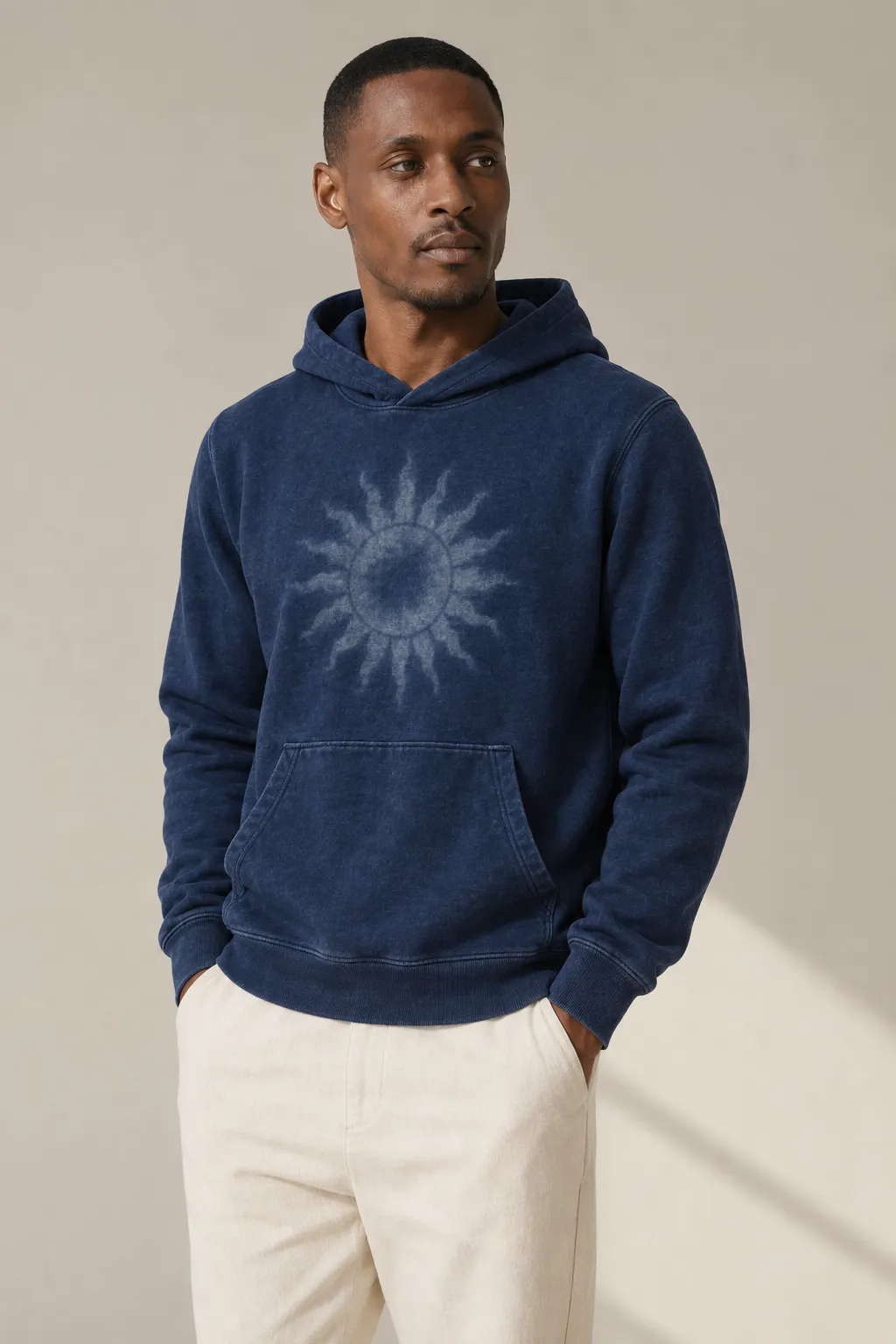
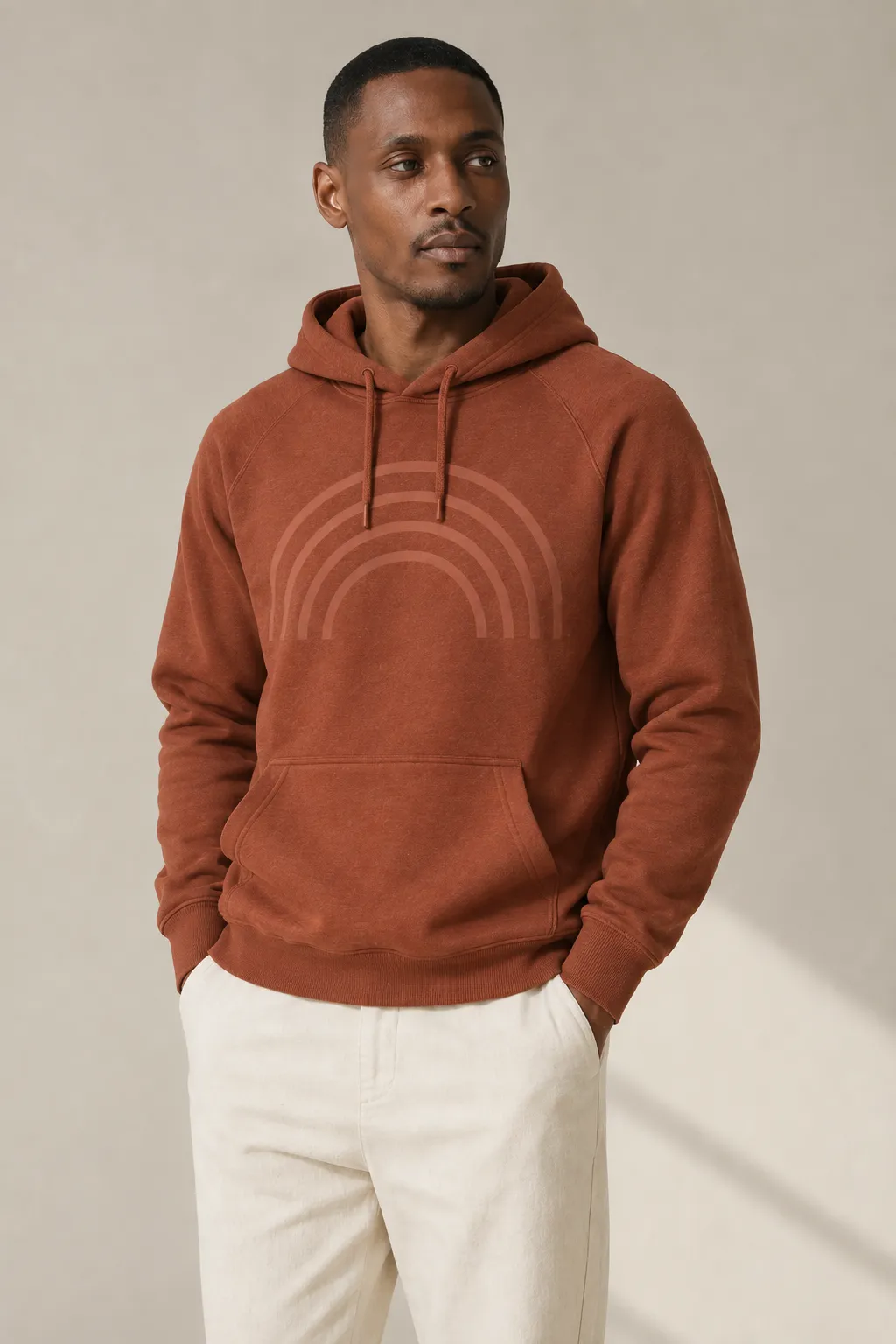
Have a style in mind? Send a reference garment and the quantity, and we quote it with screen printing.
Request a similar style→Plastisol or water-based: how the print feels
Conventional plastisol film
This finish gives the graphic more dimension and a heavier feel on the garment.
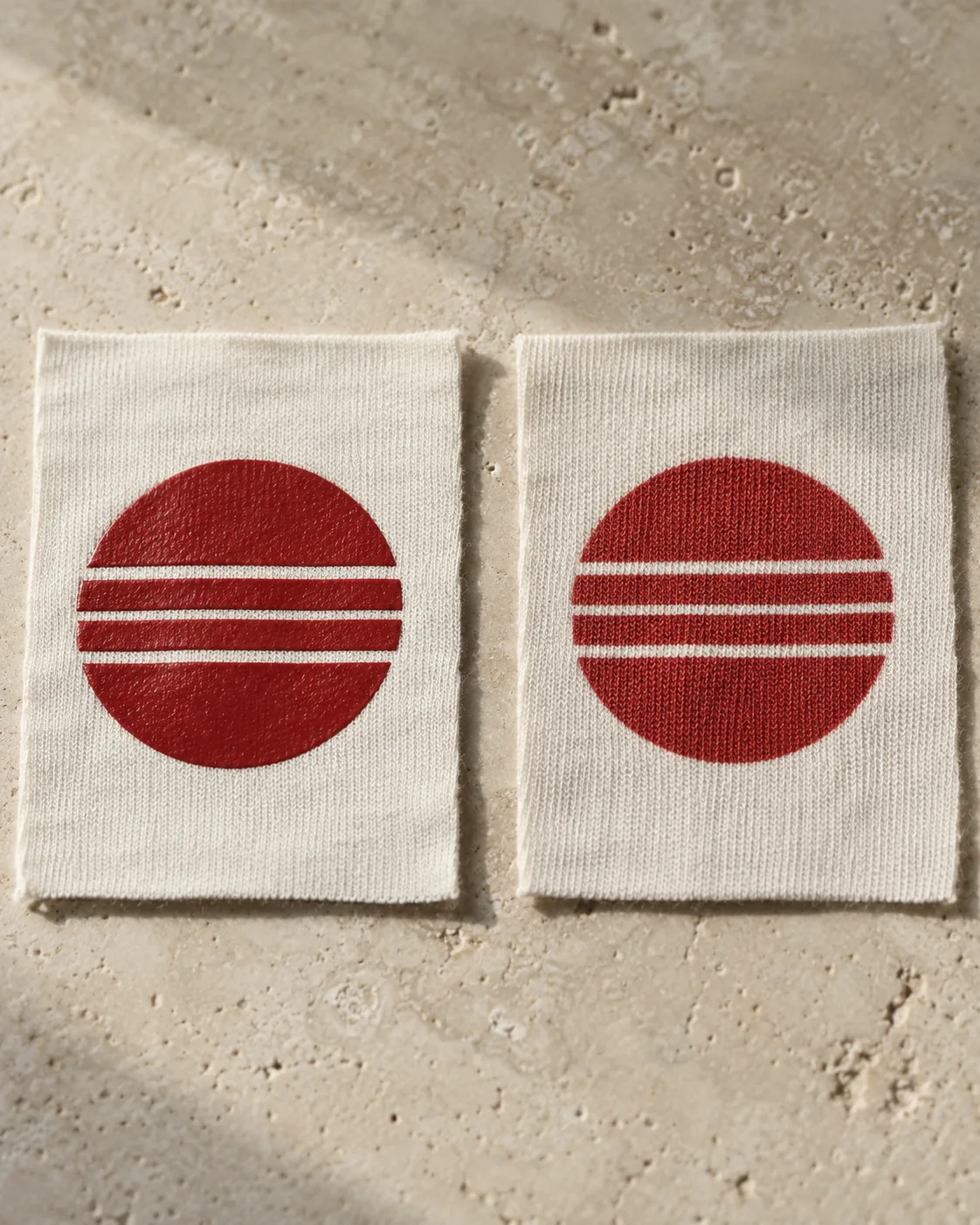
Water-based pigment finish
Water-based pigment inks can give a softer print hand.
Soft-hand plastisol also exists. Specify the required print hand as well as the ink type.
Screen or digital printing
Send the garment design and quantity. We quote it both ways.
Discharge-printed cotton single jersey
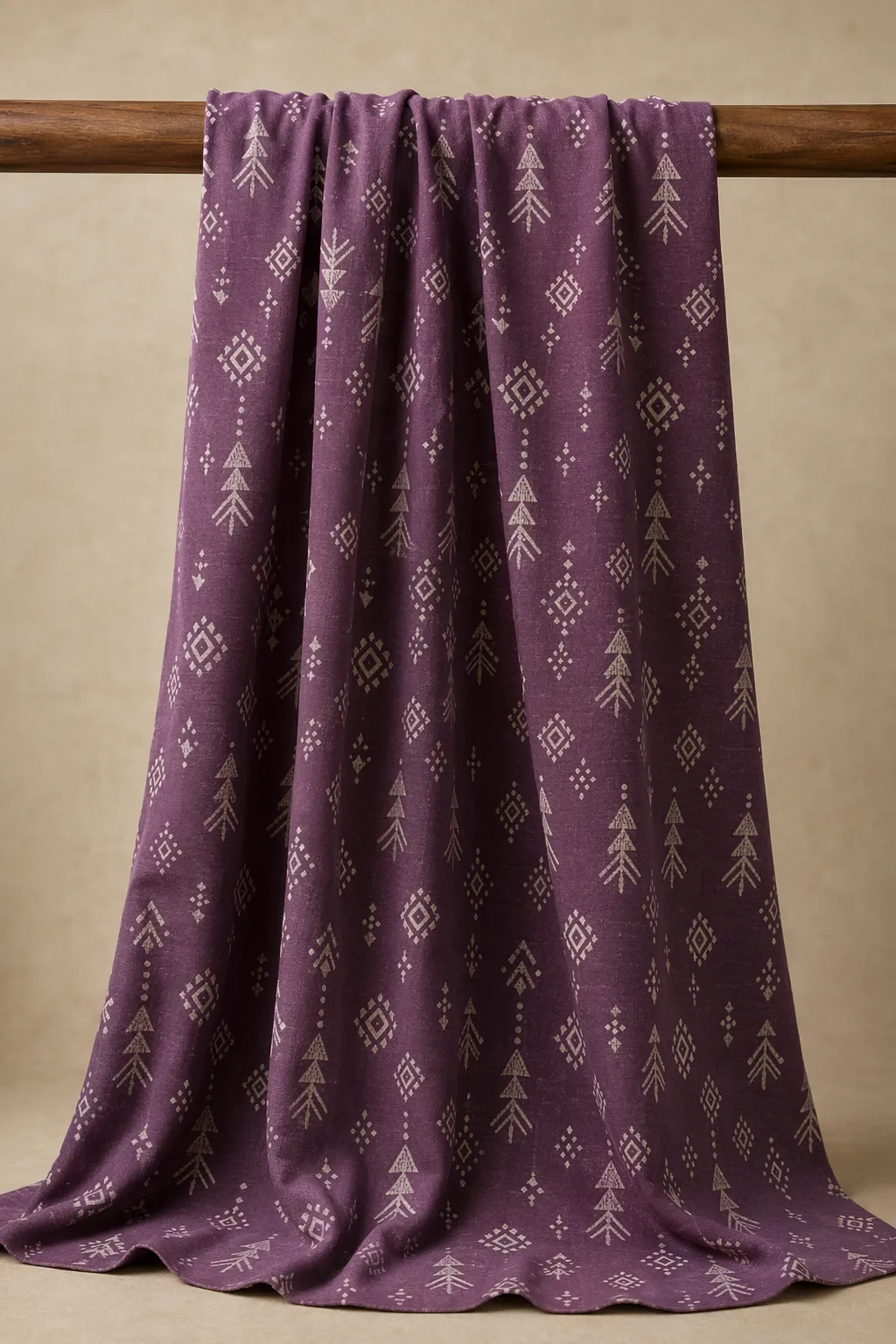
Enquire about discharge-printed fabric
Cotton fabric is also supplied on its own, by the metre. Send the discharge-print reference, fabric width and metres required for a quote.
From artwork to an approved print
- 1
Prepare the colours
Separate the vector artwork by colour. Give a colour reference for each separation.
- 2
Print and cure
Print the coloured areas in register, then cure to the selected ink's instructions.
- 3
Approve the garment
Check the print hand and finished dimensions. Confirm the placement on the garment sample before bulk.
Specifying screen printing on a tech pack
Paste an artwork link in your enquiry, or email the files to info@surajmal.com.
- Garment and fabric
- State the garment, fabric composition and construction. Give the fabric colour and weight in GSM. See single jersey for the base cloth.
- Ink or hand reference
- Specify the ink or effect, or link a garment with the print feel to match. Name any puff printing or foil printing required in the design.
- Print colours
- Give the number of print colours and a reference for each.
- Artwork link
- Include the artwork link and file format. Identify any photographs or gradients in the design.
- Print dimensions
- Give the finished width and height in millimetres for each garment size range.
- Placement and locations
- Mark every print location on the garment drawing. Measure each position from a fixed point.
- Quantities per colourway
- Give garment quantities by size, or the fabric width and metres required.
- Care and tests
- State the intended care instructions and required test results.
- Approval requirements
- List the colour, hand and detail to approve. Include print dimensions and placement in the garment sample approval.
Not sure of every line? Tell us what you are planning, and we will advise on what works best.
Send this as a brief→Tests for screen-printed garments
| Test | Method | Test scope |
|---|---|---|
| Home laundering for testing[1] | ISO 6330 | Domestic washing and drying procedures for testing fabrics and garments. |
| Colourfastness to washing[2] | ISO 105-C06 | Colour resistance during domestic or commercial laundering using a reference detergent. |
| Colourfastness to rubbing[3] | ISO 105-X12 | Resistance of the colour to rubbing off and staining other materials. |
Common questions about screen printing
Do you screen print T-shirts and hoodies for clothing brands?
Yes. We make the garments to your artwork and label. See private label for the garment programme.
What does screen printing on a T-shirt cost?
We quote each design and order. Include the print dimensions, locations and quantities per colourway. We can quote the same artwork for screen and digital printing.
Discharge printing vs screen printing: what is the difference?
Discharge inks can be screen printed. In pigment discharge, a dischargeable dye is removed from the fabric and replaced with pigment.
A question this does not answer? Ask us directly and we reply within 24 hours.
Developing a printed range?
Share the styles, artwork links and quantities per colourway for a collection quote.
Discuss your requirement→