

Surajmal Shobhachand supplies machine-embroidered garments and Schiffli eyelet fabric from India for clothing brands and garment makers.
Computerised machine embroidery builds a motif with stitches, using a digital embroidery design file. For work stitched by hand, see hand embroidery.
Embroidered garments we supply
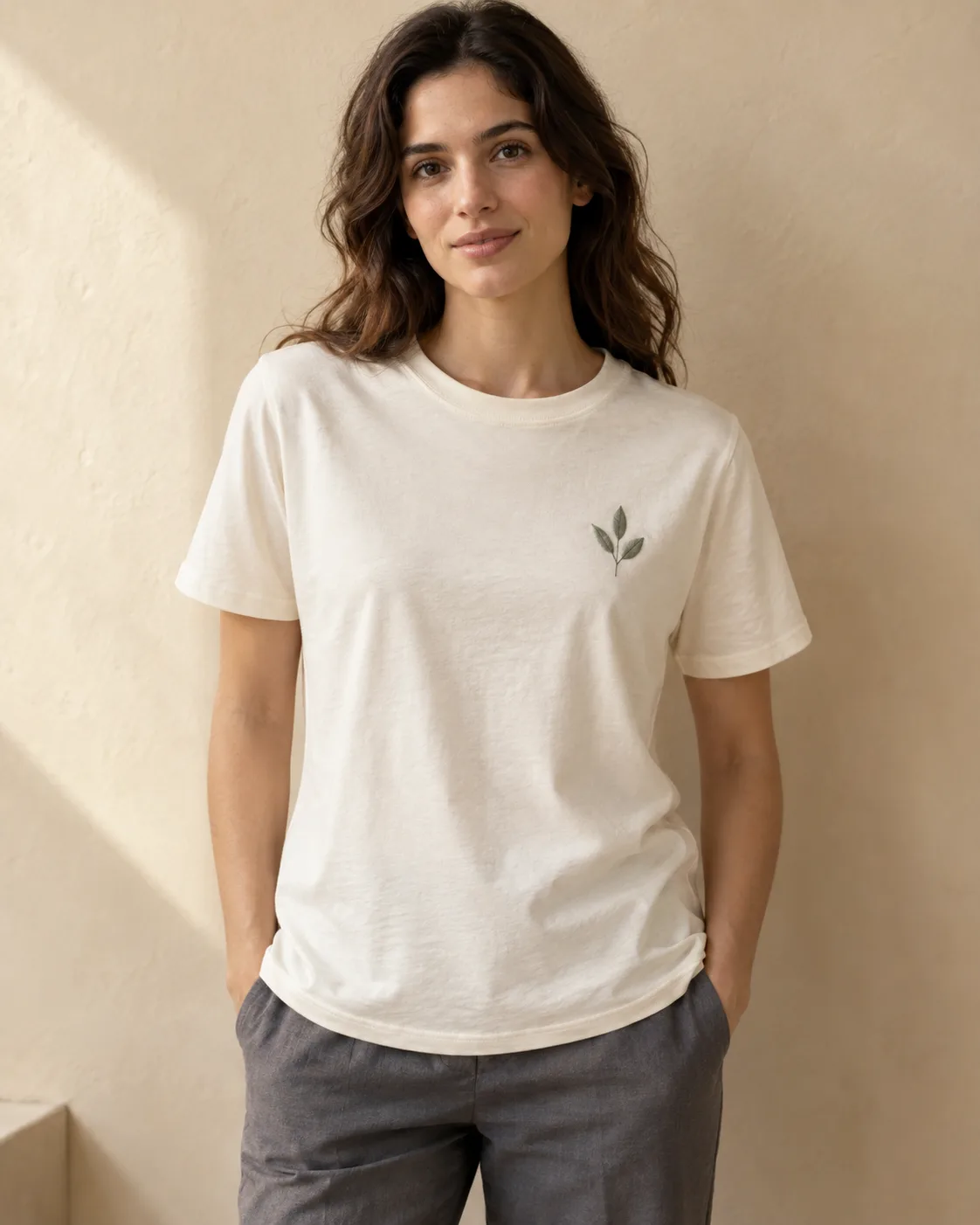
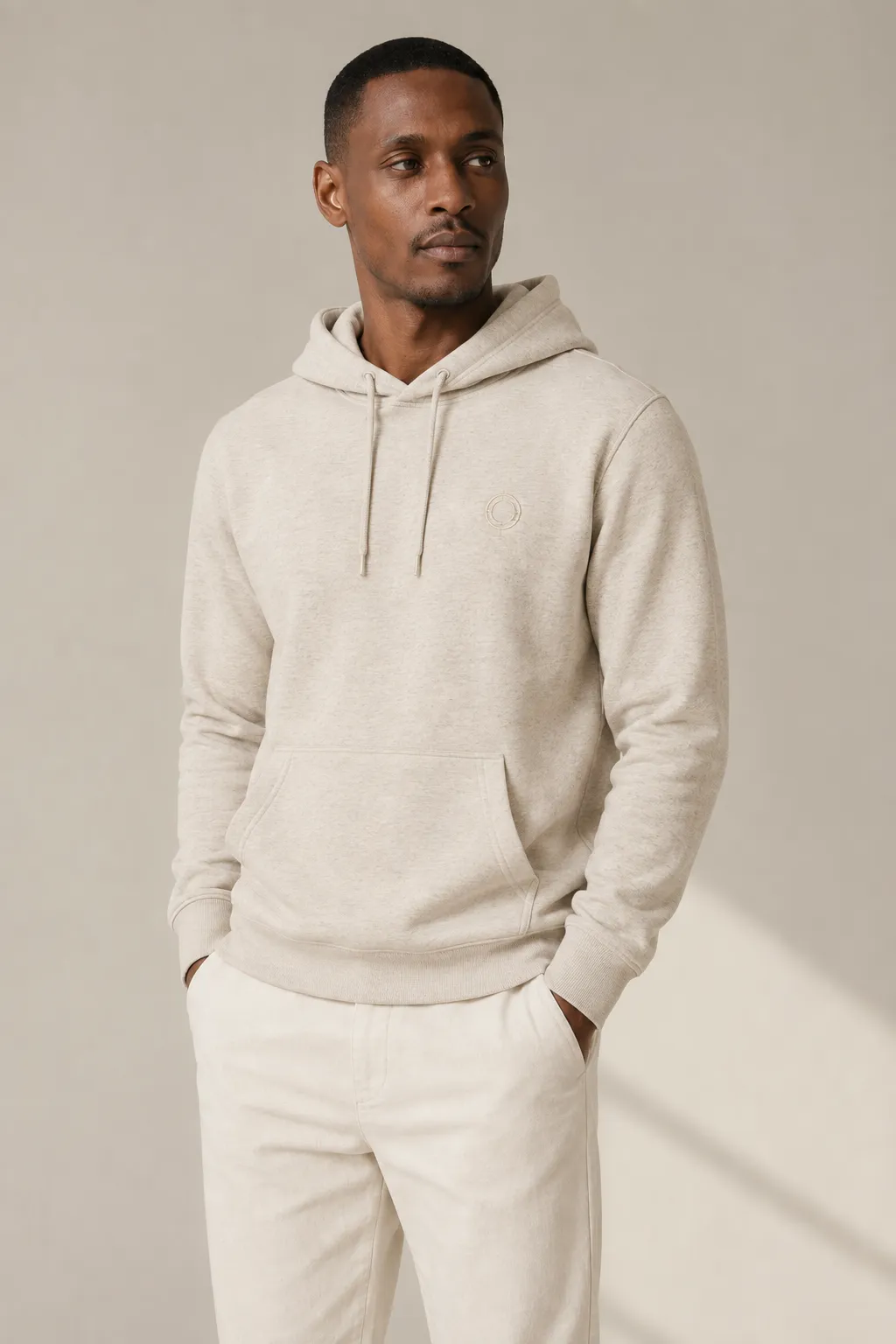
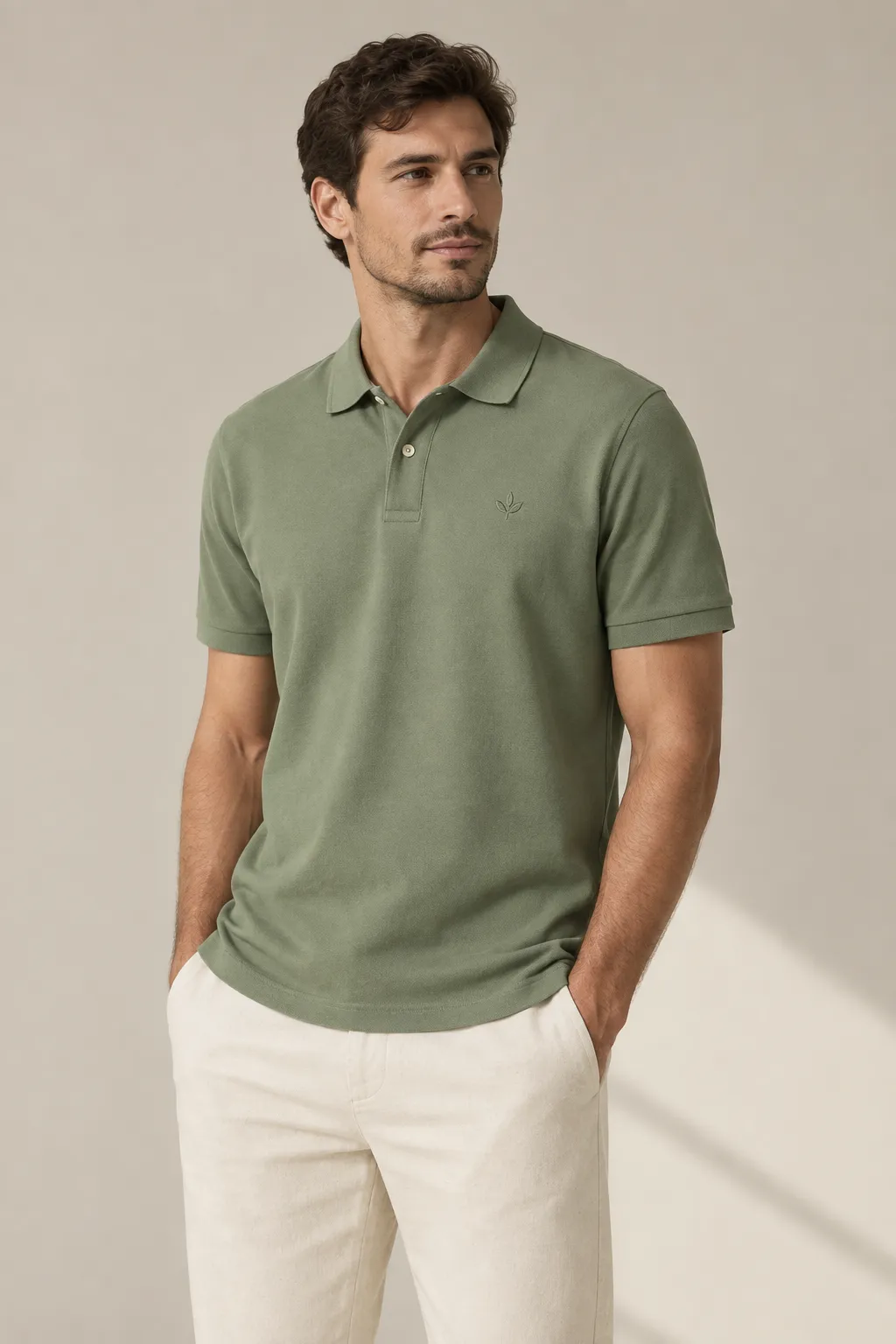
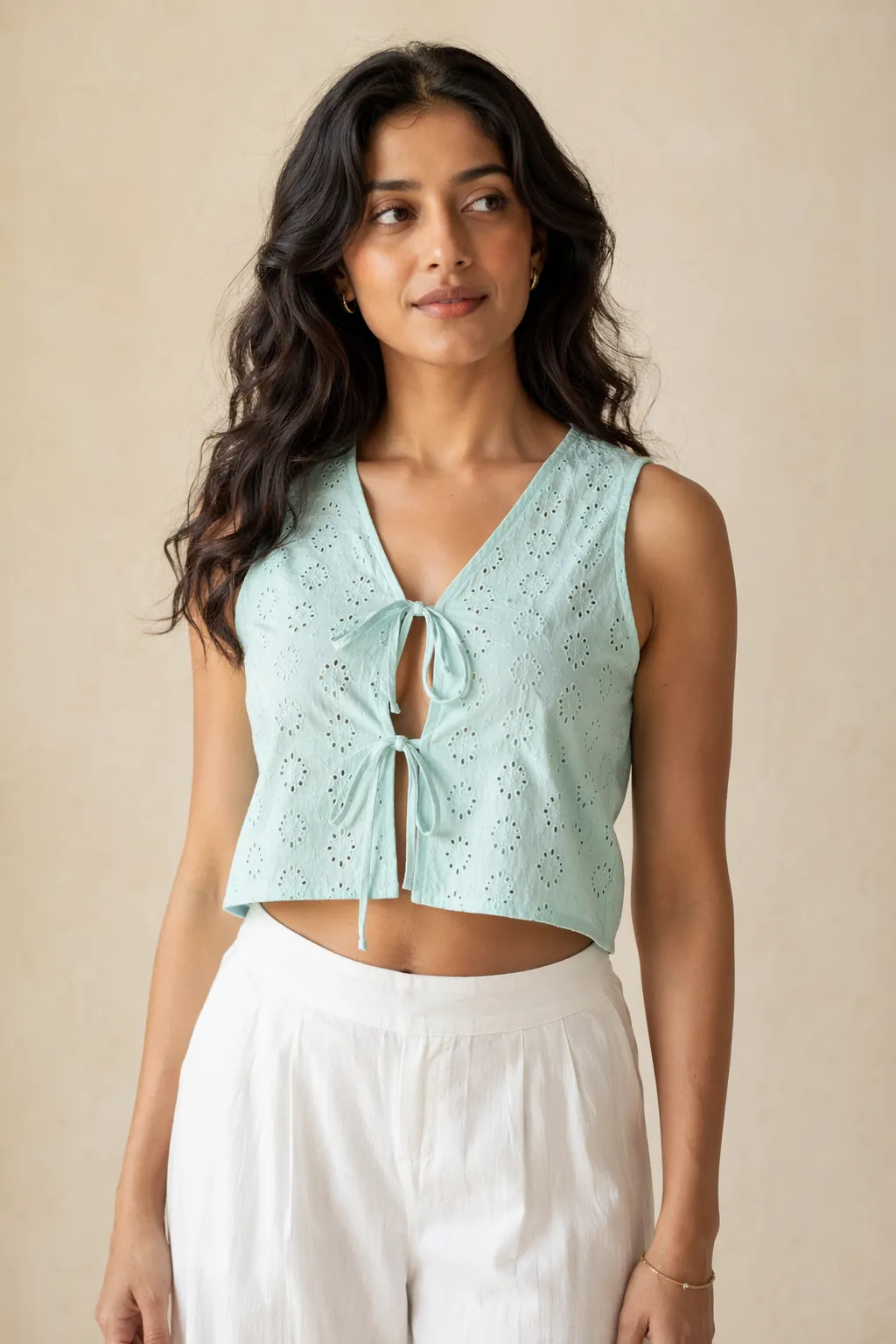
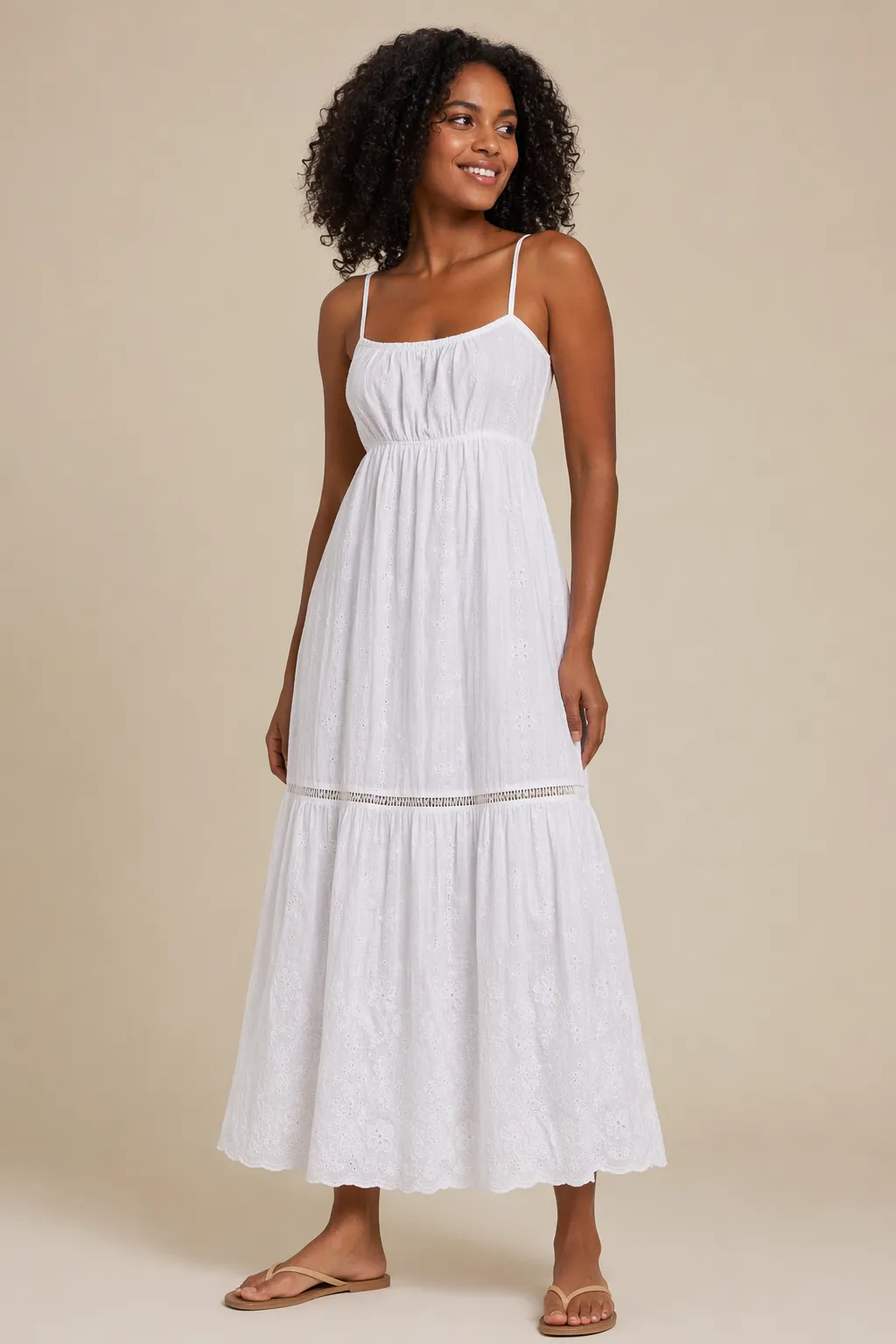
Have a style in mind? Send a reference garment and the quantity, and we quote it with embroidery.
Request a similar style→Flat or 3D puff embroidery
Flat embroidery
Satin stitches span narrow shapes, giving the motif a flat stitched surface.
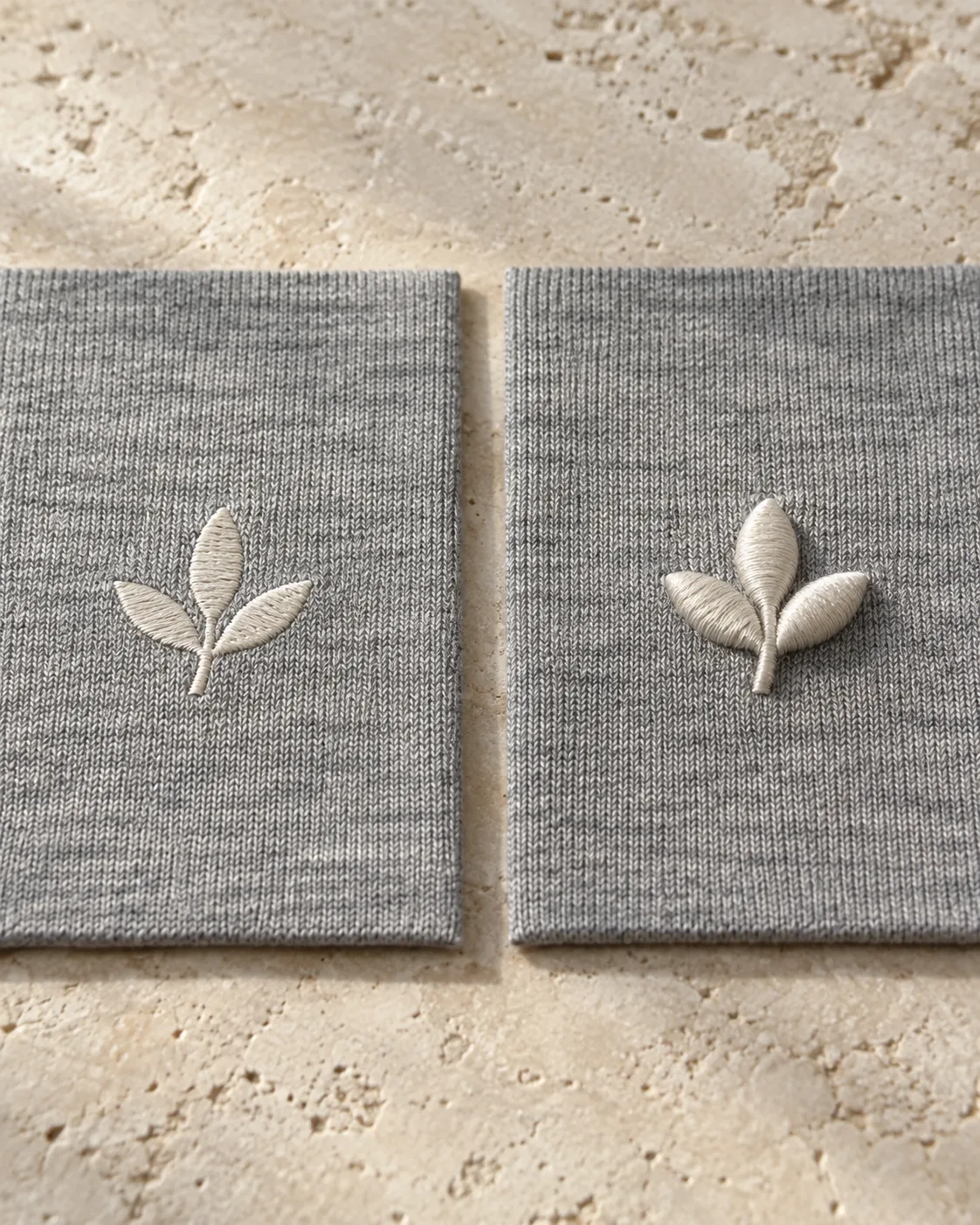
3D puff embroidery
Satin stitching over embroidery foam gives the motif a raised profile on the garment.
Name the finish on each artwork reference.
Schiffli and eyelet fabric
In cut eyelet work, stitches secure the edges of the openings. For a lace garment, see lace.
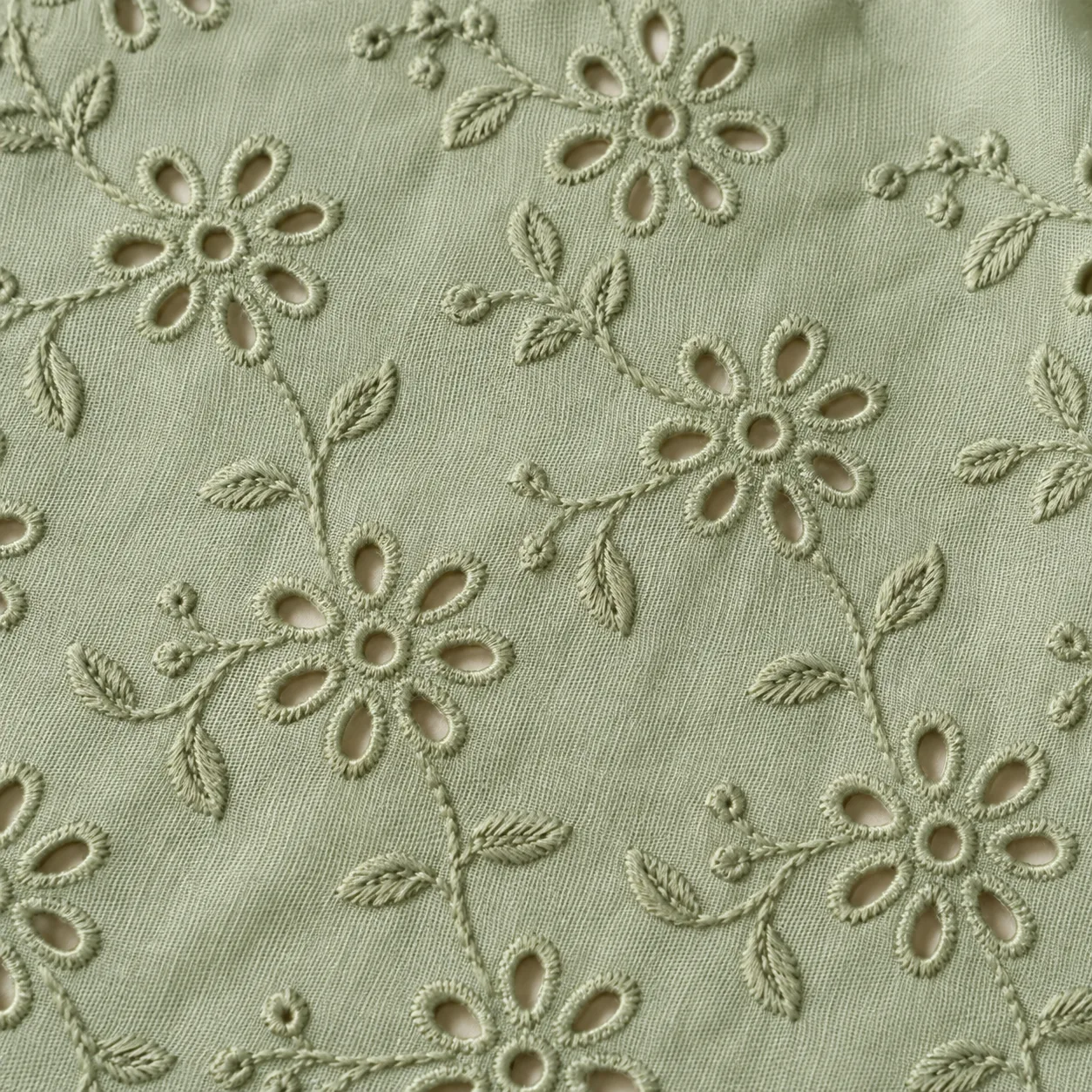
Enquire about floral eyelet fabric
Send the floral eyelet fabric reference, weight in GSM and metres required. Include the repeat dimensions and colour.
Artwork, stitches and backing
Keep an editable design file for revisions. Set stitch density, underlay and pull compensation to suit the base fabric.
Running stitches suit outlines and connecting lines. Specify the fill stitches for larger areas on the sample.
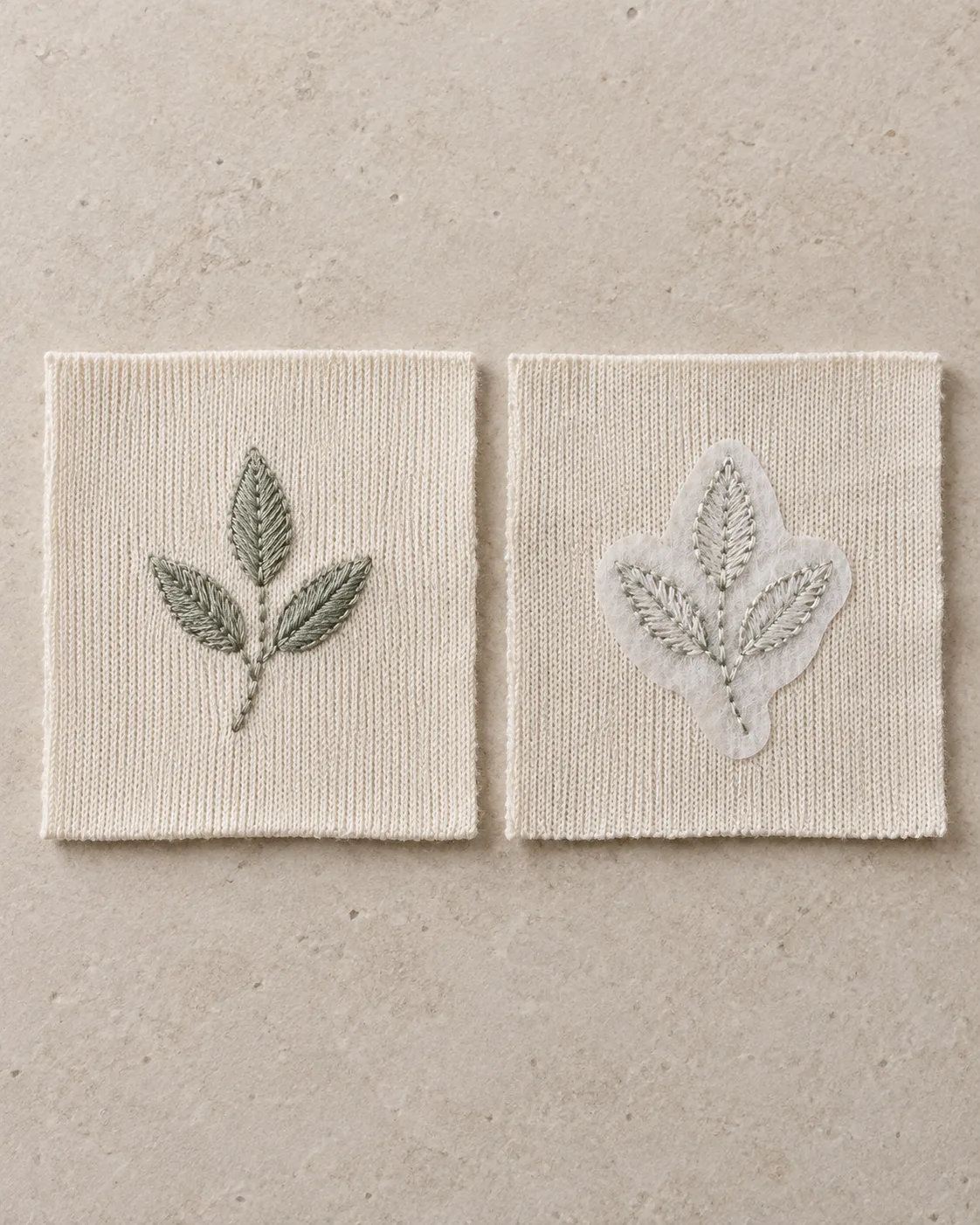
Cut-away backing is usual on knits. For lightweight knits, specify backing retained beneath the motif for support through wear and laundering, with excess trimmed beyond the design.
Specifying embroidery on a tech pack
- Reference style or motif
- Name the reference garment or motif to match.
- Artwork link
- Paste a link to the artwork and any editable embroidery design file.
- Finish
- Specify flat, tonal, 3D puff or all-over eyelet work. For appliqué or chikankari, name the technique on the reference.
- Finished dimensions
- Give the motif width and height in millimetres.
- Placement
- Measure the motif position from a fixed point and mark it on the garment drawing.
- Garment and base fabric
- State the garment, fabric composition, construction and GSM. See single jersey, piqué or fabrics for base cloth options.
- Thread colours
- Give a reference for each thread colour, including any tonal match to the base cloth.
- Backing requirements
- State the required reverse finish and any backing reference.
- Care
- Specify the intended washing and ironing instructions and required tests.
- Schiffli repeat and supply
- Give the repeat width and height. Specify fabric by the metre, a garment panel or a finished garment.
- Quantities per colourway
- Give quantities by garment size, or the fabric width and metres required.
- Target price, optional
- Include a target price for the garment or fabric if you have one.
Not sure of every line? Tell us what you are planning, and we will advise on what works best.
Send this as a brief→From artwork to bulk embroidery
- 1
Brief
Agree the motif and its position on the chosen garment or fabric.
- 2
Digitise
Convert the artwork into an embroidery design.
- 3
Sample
Review the stitched motif on the specified base cloth.
- 4
Approve for bulk
Seal the agreed piece as the reference for bulk embroidery.
Laundering tests for embroidered garments
| Test | Method | What it measures |
|---|---|---|
| Colourfastness to washing[1] | ISO 105-C06 | Colour loss and staining in a single (S) test, approximating one domestic or commercial laundering. |
| Garment dimensional change[2] | AATCC TM150 | Changes in garment length and width after home laundering. |
| Appearance after laundering[3] | AATCC TM143 | Surface smoothness, seam smoothness and crease retention after repeated home laundering. |
Common questions about embroidery
Can you supply embroidered T-shirts for clothing brands?
Yes. We make machine-embroidered T-shirts to your design and label, including chest, sleeve or collar placements. See private label for a garment programme.
Can we buy embroidered fabric without ordering garments?
Yes. We supply embroidered fabric on its own, by the metre.
How is machine embroidery costed in India?
We quote each design against its artwork and quantities. Stitch count and machine settings determine the estimated running time used in costing; colour changes also enter that estimate.
Are Schiffli, eyelet and broderie anglaise the same thing?
No. Broderie anglaise is a form of cutwork embroidery. Use a pattern reference to specify the cloth, with the machine method and the eyelet appearance named separately.
Should we choose embroidery or printing for a clothing design?
Choose embroidery when the design calls for stitched texture. For a printed version of the artwork, see screen printing. We can quote the design both ways.
How long does a machine-embroidered garment sample take?
Allow 4 to 10 days for the first machine-embroidered garment sample from an agreed brief.
A question this does not answer? Ask us directly and we reply within 24 hours.
Planning an embroidered clothing range?
For a quote for an embroidered clothing range, send a garment reference or tech pack for each style, artwork references and quantities per colourway. We reply within 24 hours.
Discuss your requirement→