

Surajmal Shobhachand supplies appliqué garments from India.
Appliqué forms a picture or pattern from smaller pieces of cloth, stitched or applied onto a larger background fabric.
Appliqué garments we supply
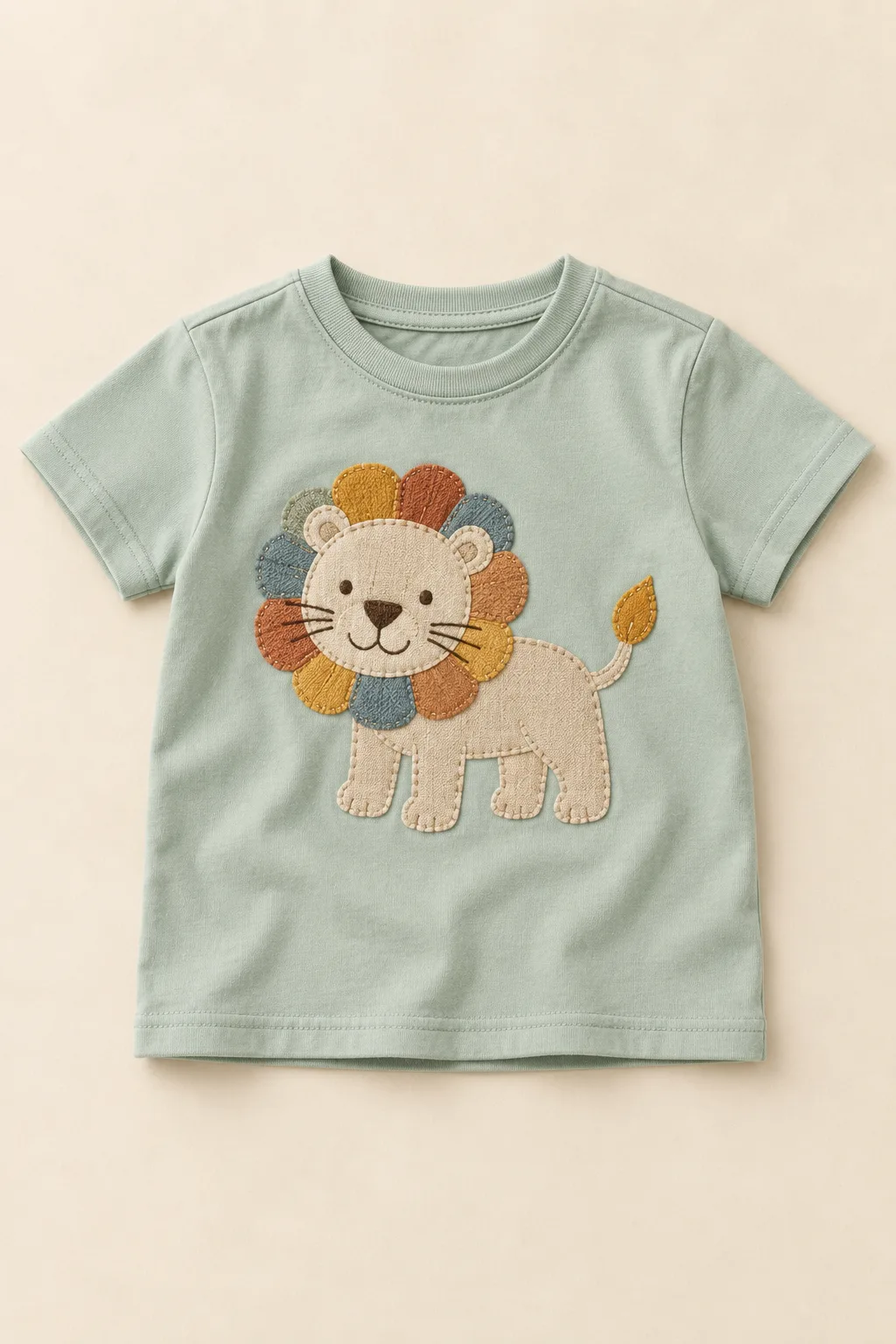
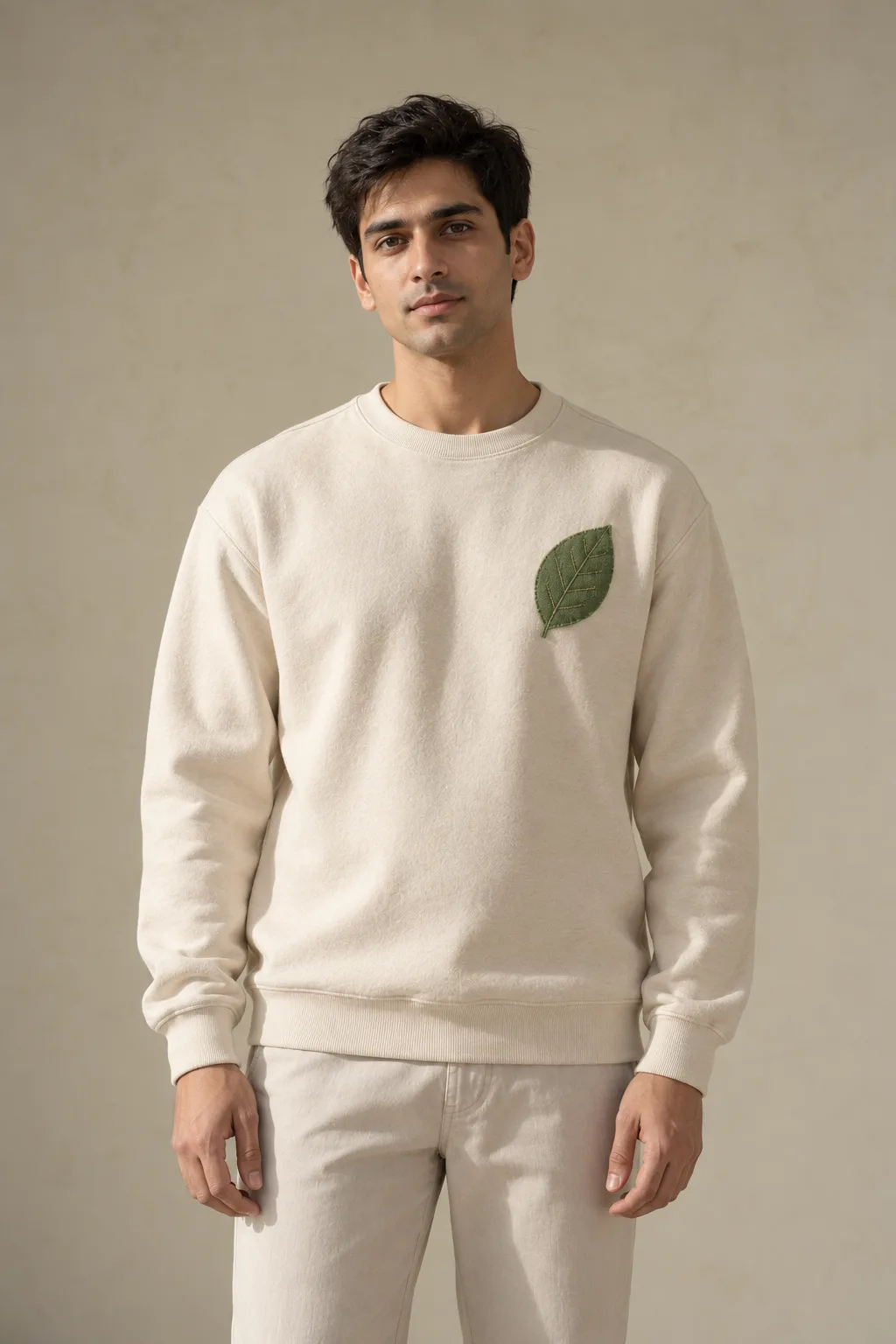
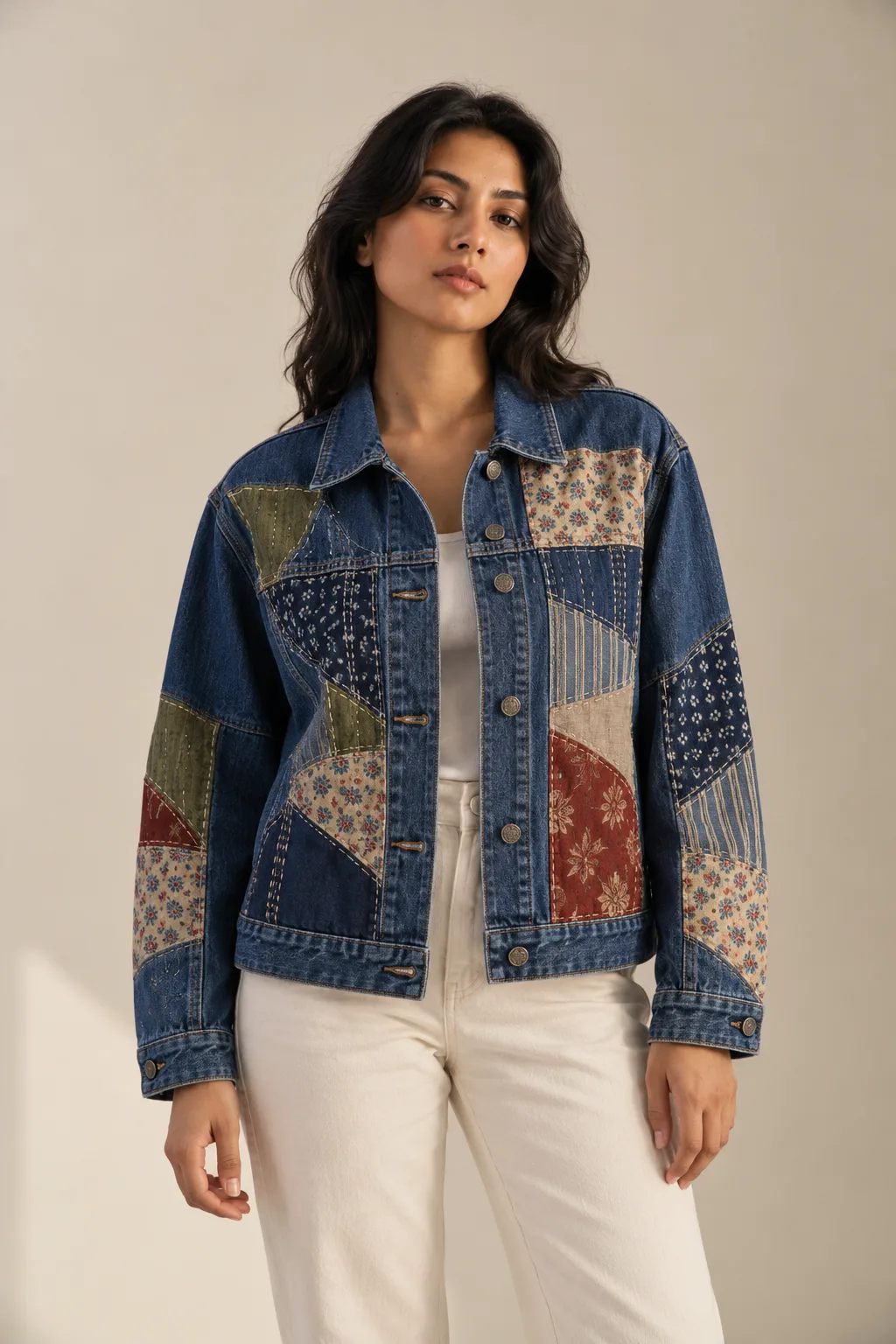
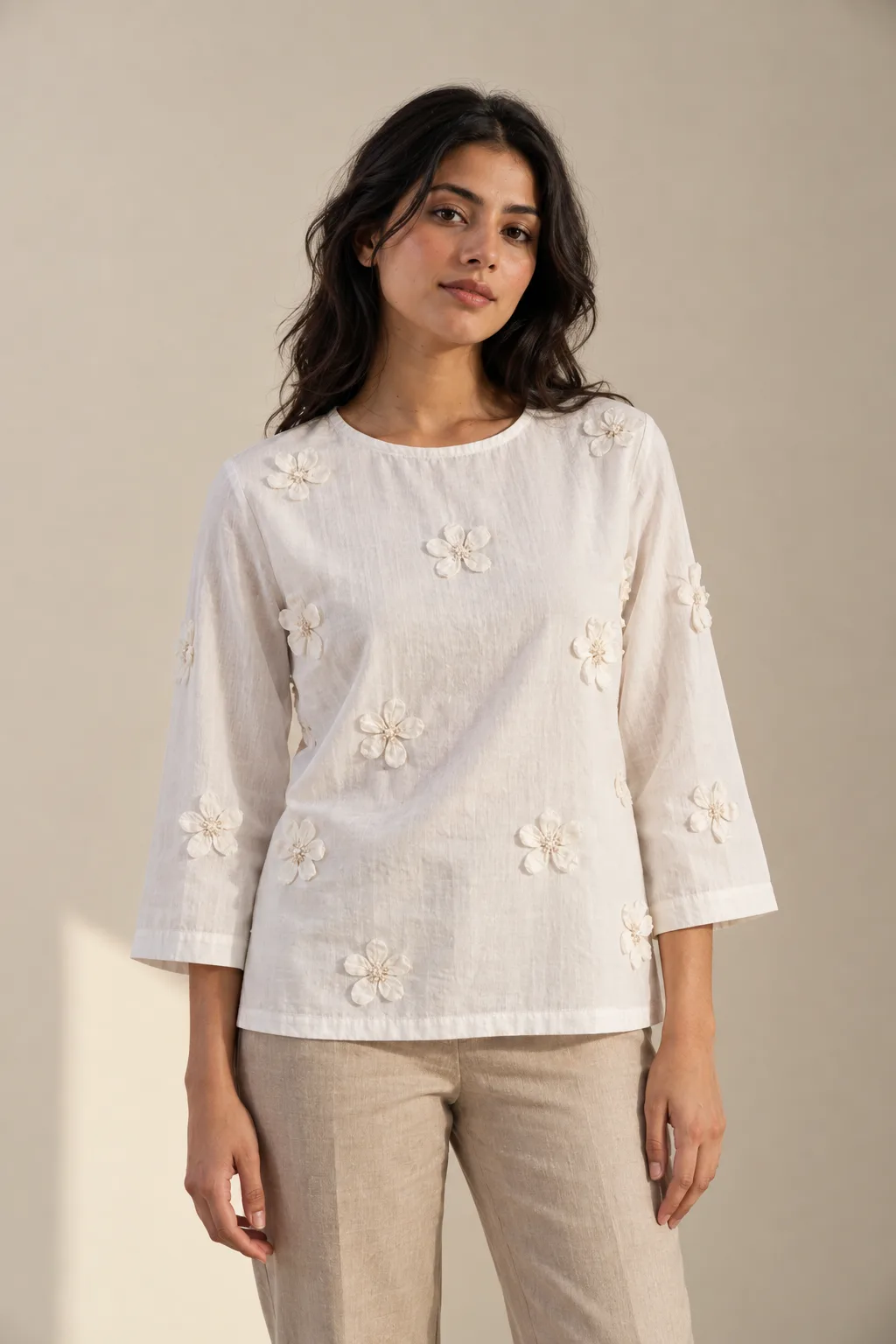
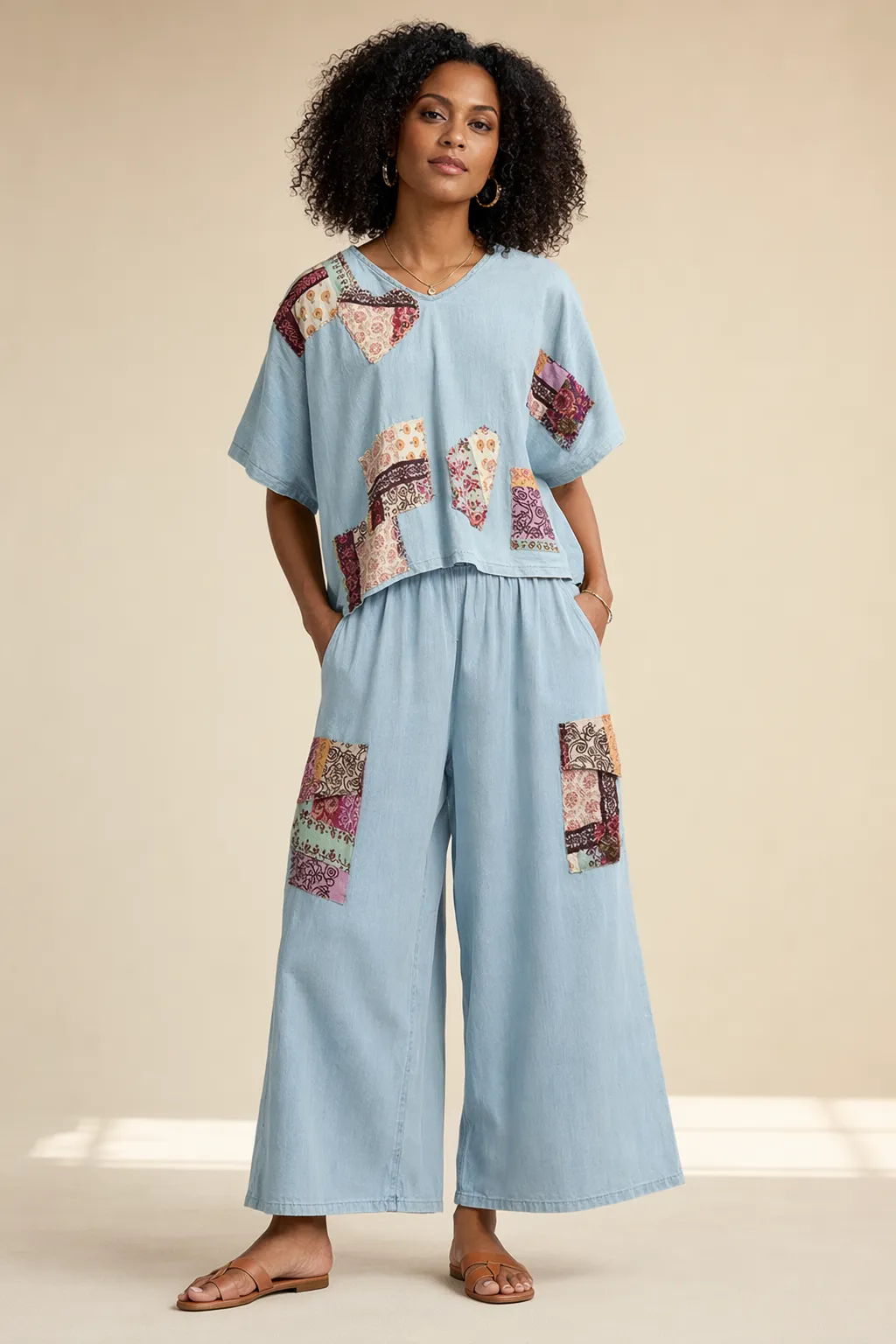
Have a style in mind? Send a reference garment and the quantity, and we quote it with appliqué.
Request a similar style→Applied or reverse appliqué
Choose where the motif fabric sits.
Applied cloth
The motif is added over the garment fabric. Stitches secure the motif around its perimeter.
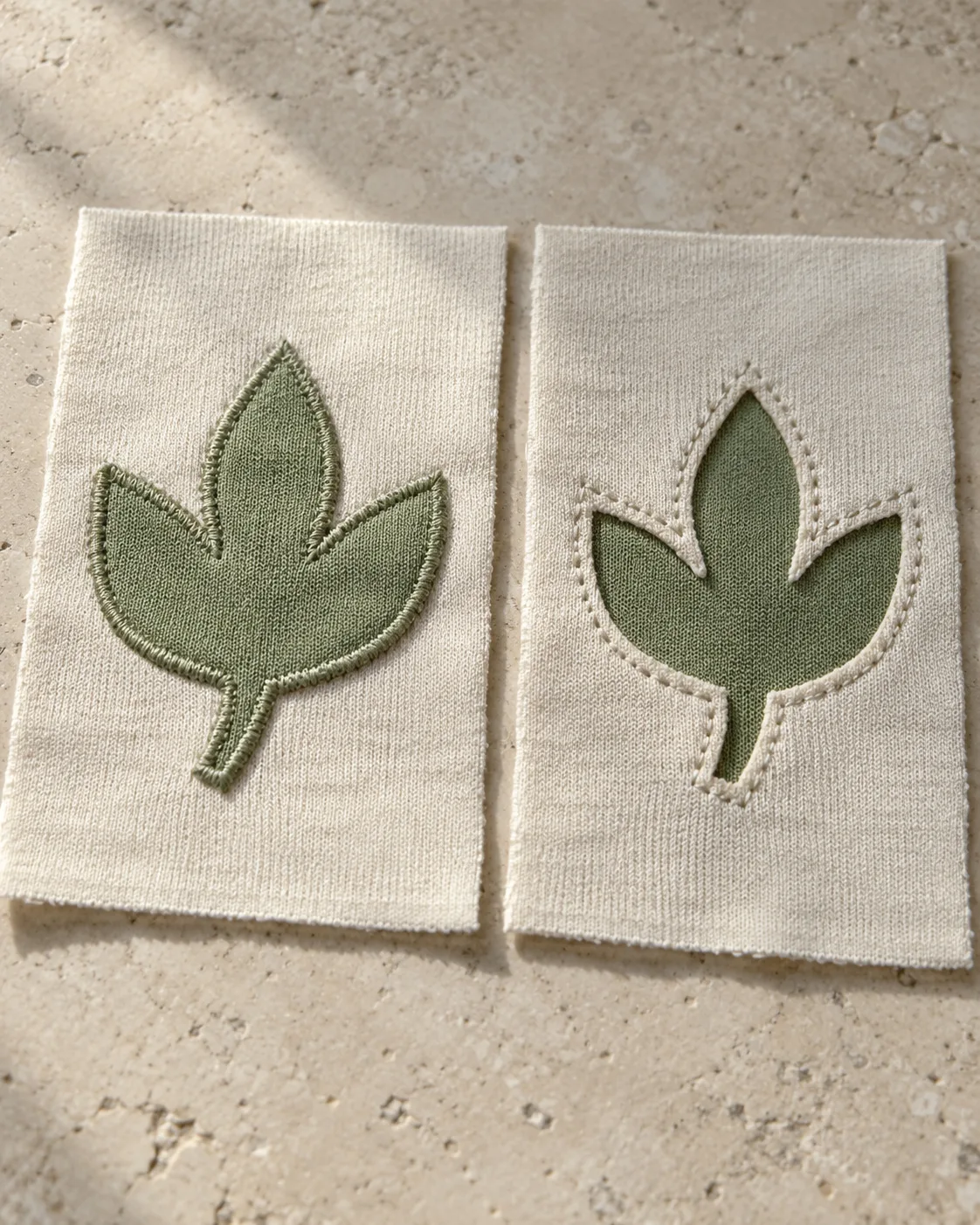
Reverse appliqué
The motif fabric is revealed from beneath the garment surface. The layers are stitched along the outline, then only the ground inside it is cut away, leaving the motif fabric intact.
The two fabrics
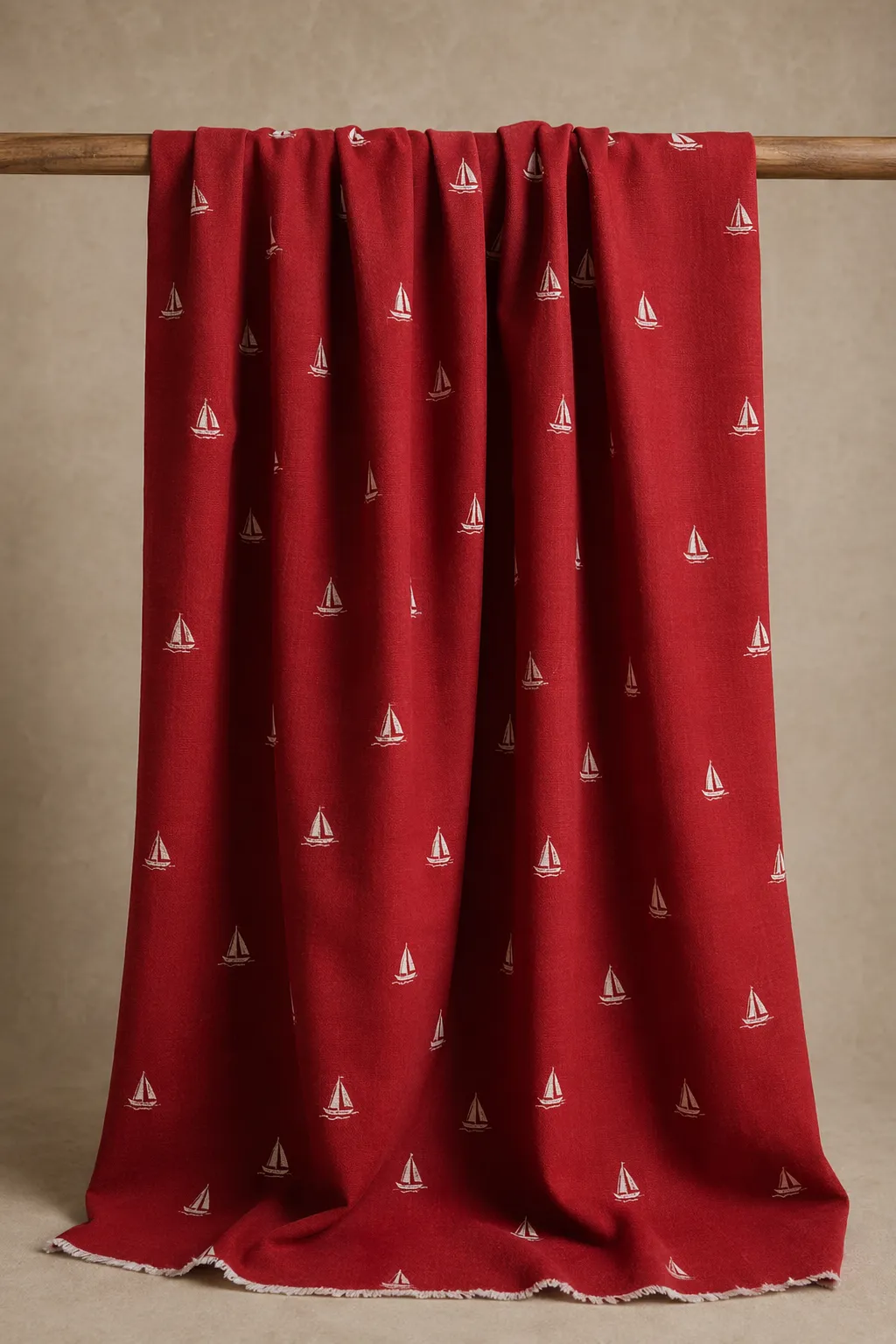
These catalogue qualities are references for specifying the ground and motif fabrics.
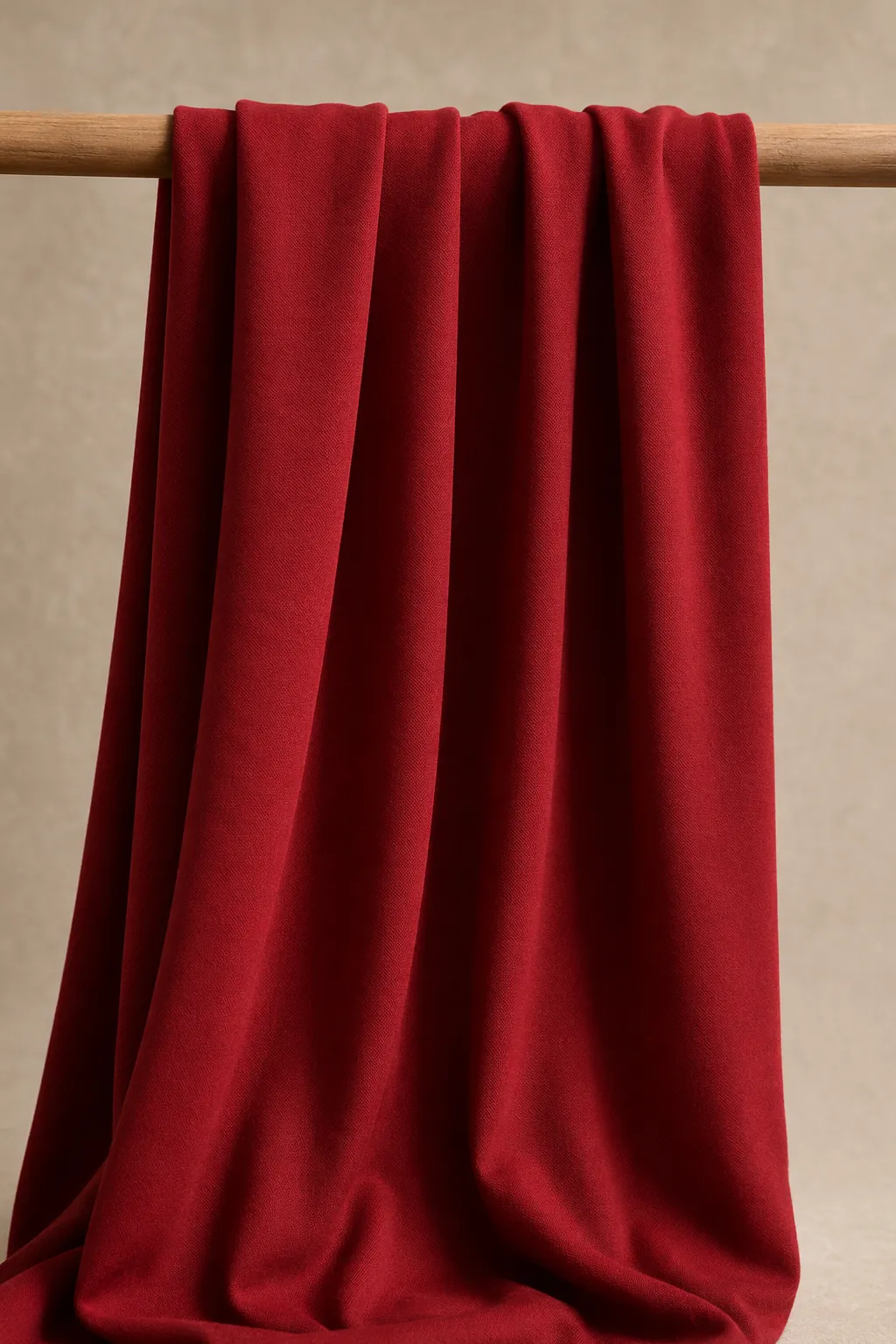
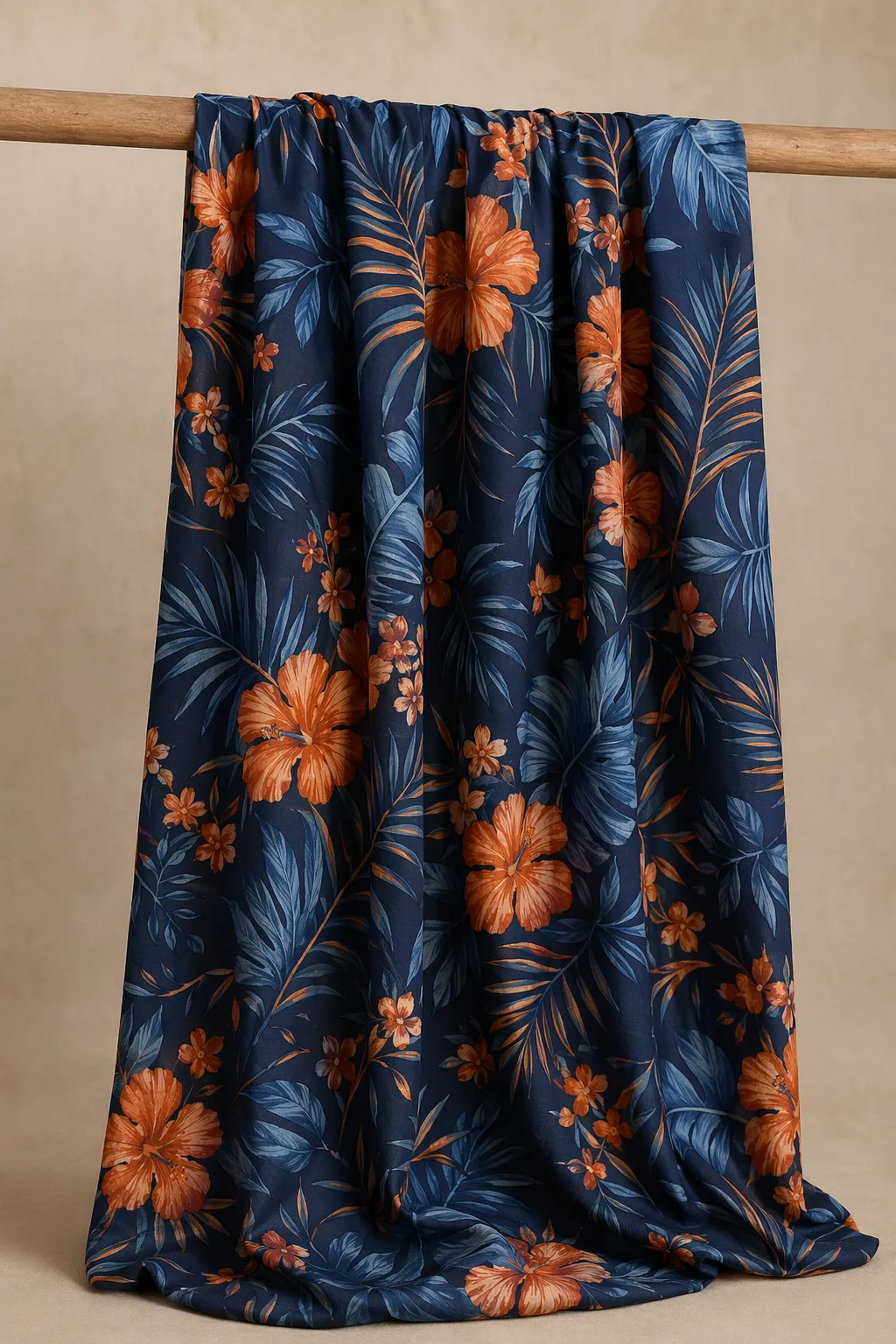
Get a quote for the fabric combination on a garment
Send a garment reference or tech pack and quantity, with the ground and motif fabric references, colours, placement, attachment and edge finish.
Specifying appliqué on a tech pack
- Artwork or reference link
- Send the artwork or a link to the motif reference.
- Garment and quantities
- Name the garment and size range. Give quantities per colourway.
- Construction
- Specify applied or reverse appliqué.
- Ground fabric
- Give the garment fabric reference, fibre content and weight.
- Motif or underlayer fabrics and colours
- Give the reference, fibre content, weight and colour for each fabric. For applied cloth, choose a light- to medium-weight tight weave, with a smooth surface unless texture is part of the design.
- Finished dimensions
- Give the motif width and height in centimetres.
- Placement
- Measure the position from a fixed garment point, such as the high point shoulder or centre front.
- Attachment
- Specify hand or machine stitching, or fused-and-stitched attachment. With fusible web, the cut shape is fused into position, then stitched around its edge.
- Edge reference
- Send a close-up of the finish. For machine appliqué, finish the raw cut edge with zigzag or satin stitching.
- Intended washing and drying
- State the care method and the checks to approve on the sample.
Not sure of every line? Tell us what you are planning, and we will advise on what works best.
Send this as a brief→Tests for appliqué garments
For dry-cleaned styles, specify AATCC TM86 to assess applied-design durability under repeated dry-cleaning.[1]
| Test | Method | What it shows |
|---|---|---|
| Washing and drying procedure[2] | ISO 6330 | Washing and drying procedures together, as required for a complete test. |
| Colourfastness to washing[3] | ISO 105-C06 | Colour loss and staining, with a single (S) test closely approximating one domestic or commercial laundering. |
| Fabric dimensional change[4] | AATCC TM135 | Fabric size change after home laundering. |
| Finished garment appearance[5] | AATCC TM143 | Surface smoothness, seam smoothness and crease retention after home laundering. |
Common questions about appliqué
Can you do appliqué on T-shirts?
Yes. We make T-shirts with chest motifs, back designs or other placements marked on the garment drawing.
What is the difference between appliqué and embroidery?
Embroidery creates an image with needle and thread; appliqué uses fabric shapes. For a thread design, see garment embroidery.
What is the difference between appliqué and patchwork?
Pieced patchwork joins fabric pieces to make a larger cloth; appliqué attaches them to a background fabric.
How is appliqué approved for washing?
Approve attachment and appearance on a garment sample after its intended washing and drying. Preshrink every fabric using the same care method before making the sample.
A question this does not answer? Ask us directly and we reply within 24 hours.
Adding appliqué to a collection?
To enquire about an appliqué collection, send garment references or tech packs, motifs and quantities per colourway.
Discuss your requirement→