

Surajmal Shobhachand supplies Chikankari kurtis, kurtas, tops, dresses and co-ords from India for brands.
Chikankari is hand embroidery worked with needle and thread. White cotton is its traditional ground.
Chikankari garments we supply
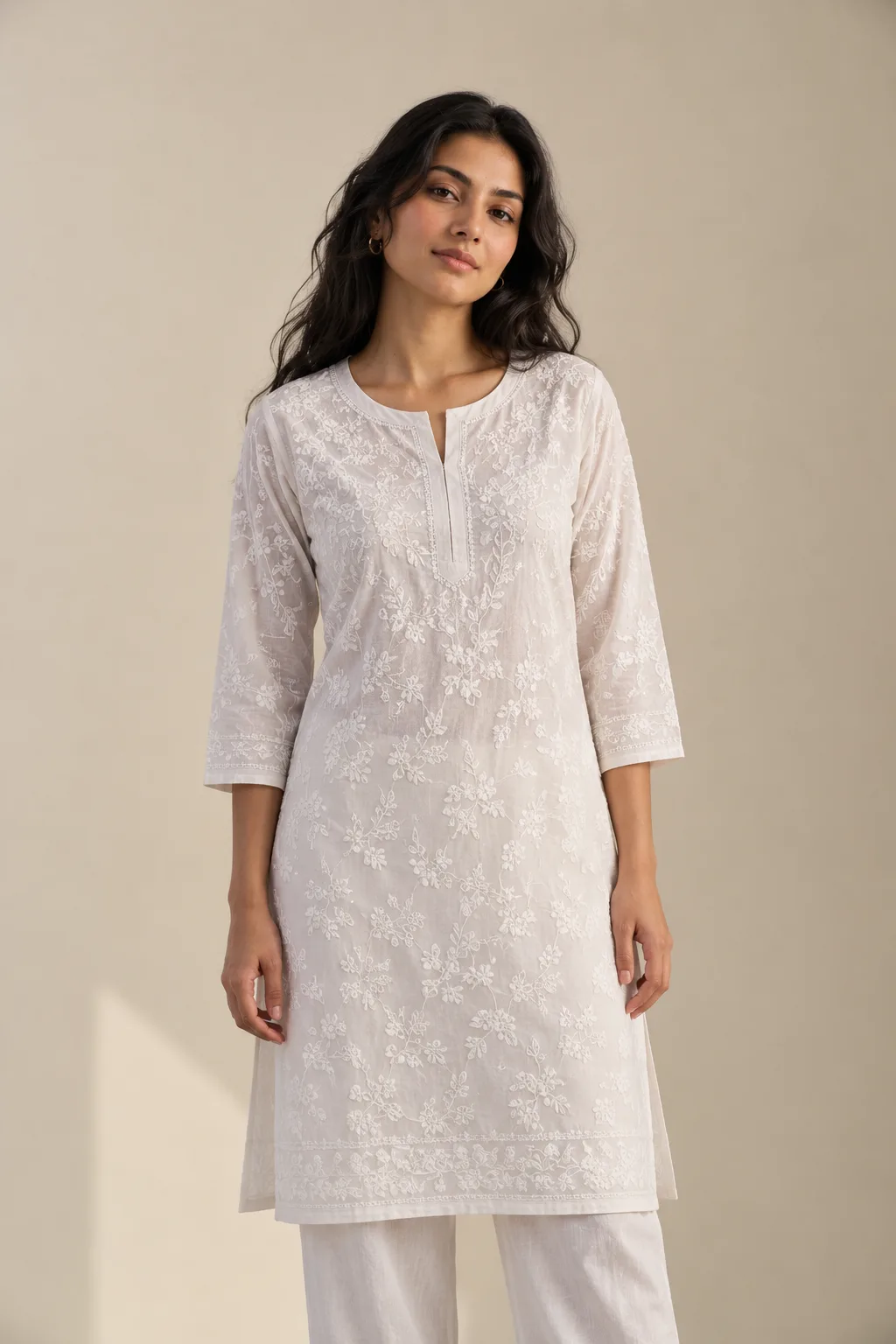
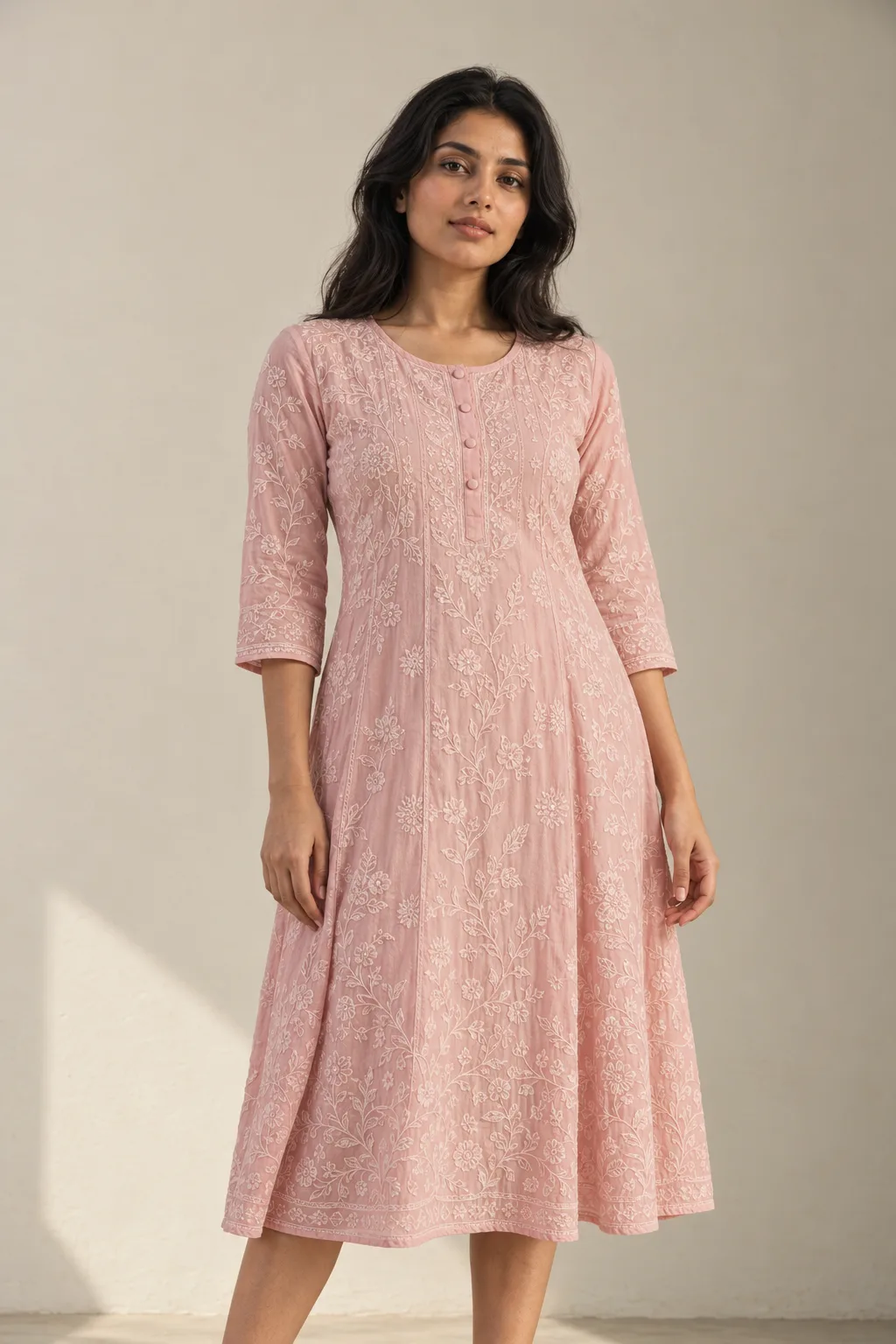
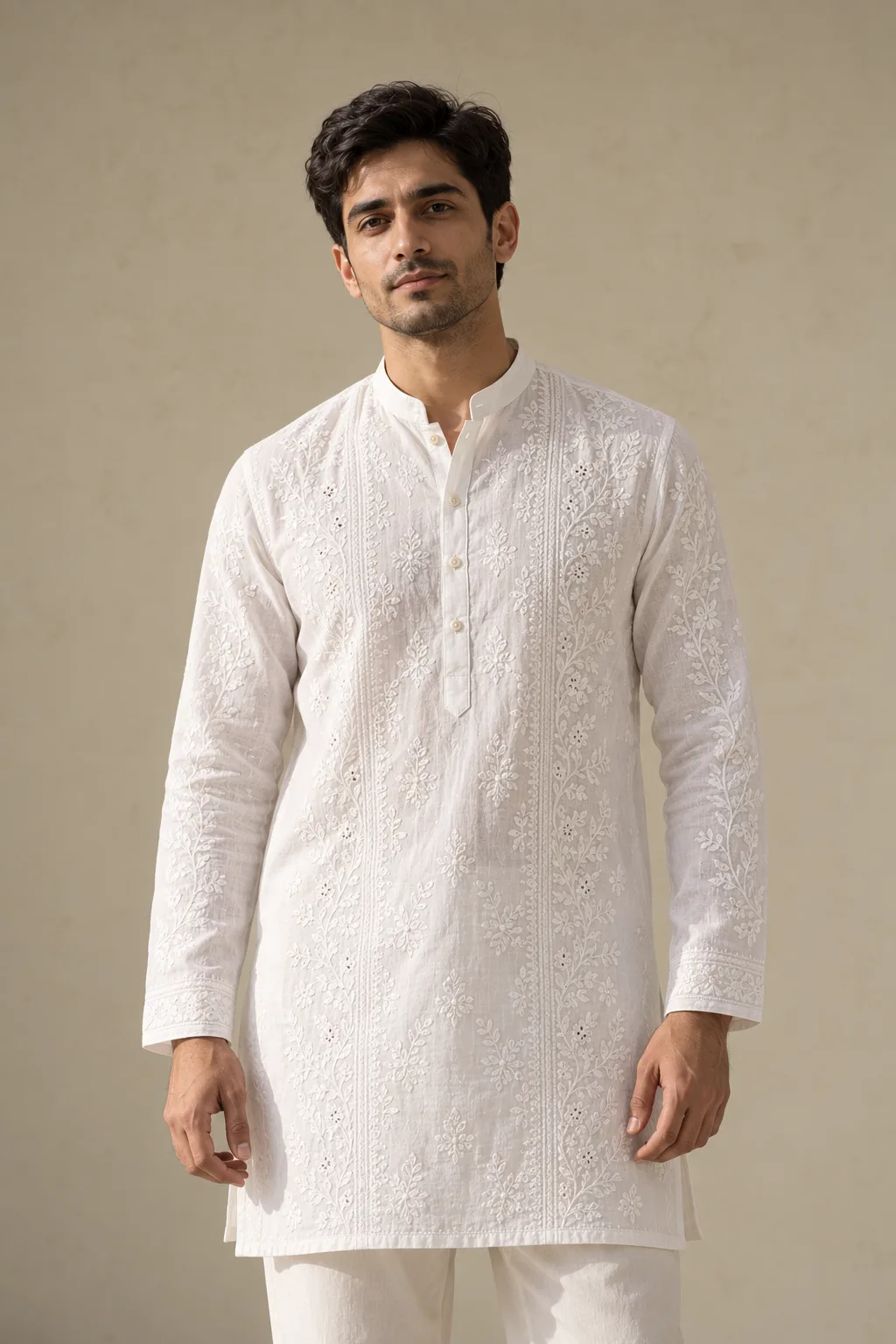
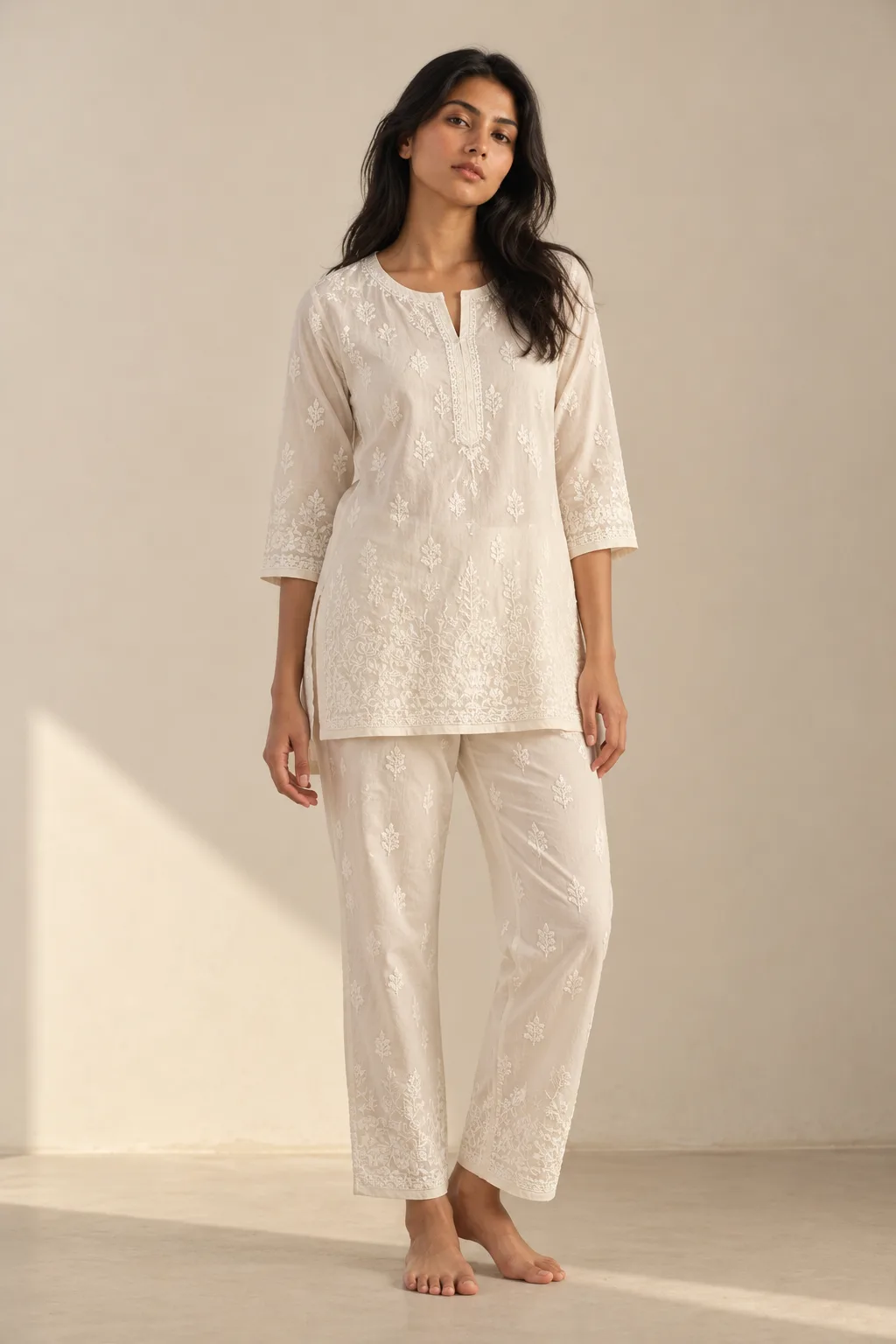
Have a style in mind? Send a reference garment and the quantity, and we quote it with Chikankari.
Request a similar style→Bakhia shadow work and Phanda knots
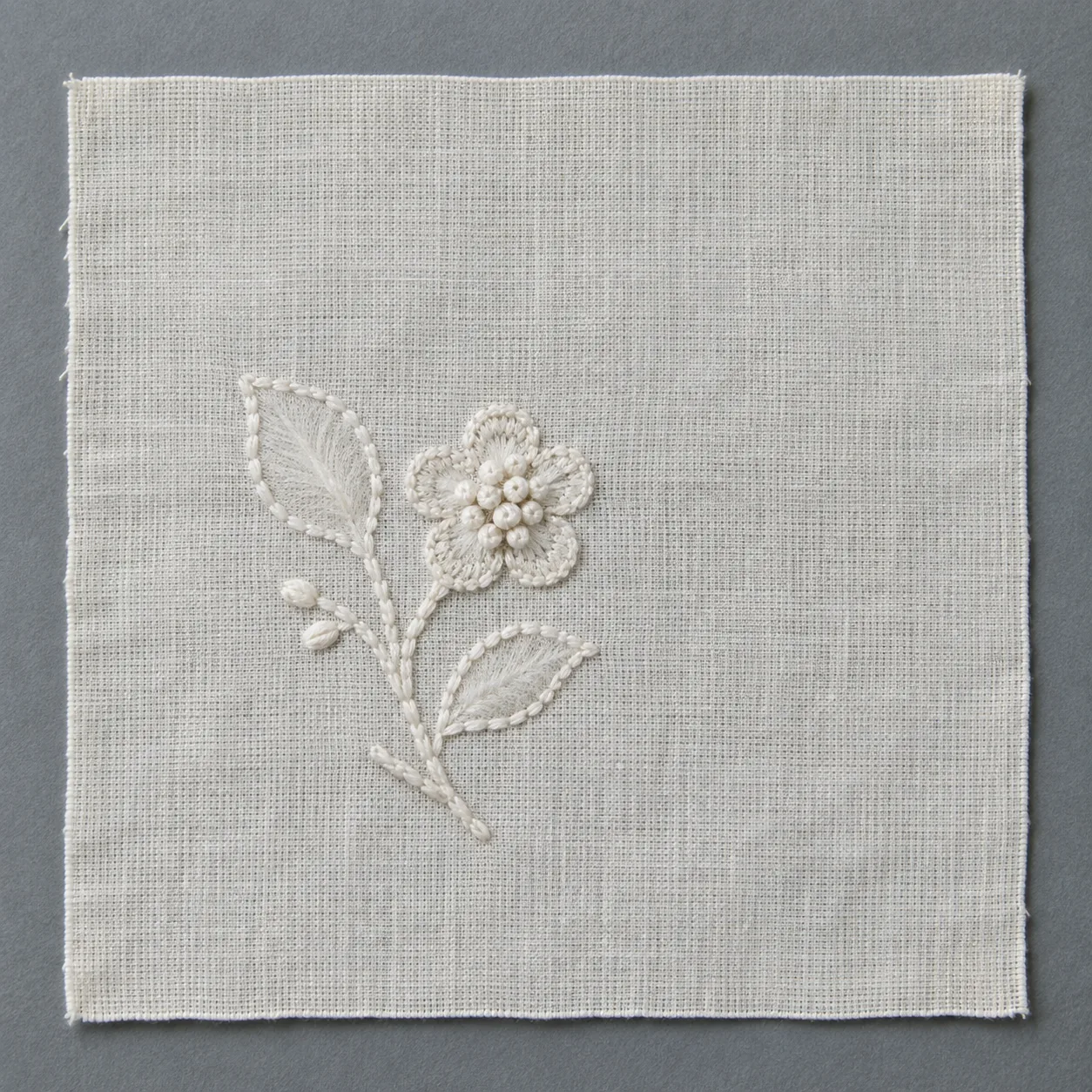
Bakhia shows a tiny running-stitch outline on the face. The embroidered areas of fine muslin become opaque, giving the motif light and shade.
Phanda forms small raised knots used to fill petals or leaves.
Enquire about Chikankari fabric
Send the fabric reference, weight and required metres, with the motif and stitch reference, for a fabric quote.
Specifying Chikankari on a tech pack
- Garment or fabric
- State the garment and size range, or the usable fabric width and required metres.
- Ground fabric and GSM
- Give the composition, construction and weight. Grounds include cotton, mull, muslin, voile, organza and polyester.
- Ground and thread colours
- Include a colour reference for the ground and each thread.
- Motif dimensions
- Give the finished width and height of each motif on the artwork.
- Coverage
- Mark all-over work or the panels and borders to embroider.
- Measured placement
- Measure each placement from a fixed point on the garment drawing.
- Stitch reference or close-up
- Attach a reference piece or photograph showing the stitch treatment to match.
- Quantities
- Give the quantity per colourway, by garment size or in fabric metres.
- Care and sample acceptance
- State the intended care and the appearance and measurements to approve on the sample.
Not sure of every line? Tell us what you are planning, and we will advise on what works best.
Send this as a brief→How Chikankari is made
- 1
Print the pattern
Separate blocks print the butis, floral patterns and borders onto the cloth.
- 2
Embroider
The stitches follow the printed design.
- 3
Wash
Washing removes the blue transfer print, called neel.
Tests for Chikankari garments
| Test | Method | What it shows |
|---|---|---|
| Colourfastness to washing[1] | ISO 105-C06 | Colourfastness under the specified laundering conditions. |
| Colourfastness to rubbing[2] | AATCC TM8 | Colour transfer from the textile surface through rubbing. |
| Dimensional change of the garment[3] | AATCC TM150 | Garment size change after home laundering. |
| Appearance after washing[4] | AATCC TM143 | Fabric and seam smoothness, and crease retention after home laundering. |
Common questions about chikankari
Do you make Chikankari kurtis for brands?
Yes. We make kurtis to your design and label through our private-label service.
Can we buy Chikankari fabric without ordering garments?
Yes. We supply Chikankari fabric by the metre. Include the fabric reference, weight, usable width and required metres in the fabric enquiry.
What is the price of Chikankari?
We quote each design from its brief. Include the stitch reference and coverage, with a garment reference or tech pack and quantity for garments, or a fabric reference, weight and metres for fabric.
Is Lucknowi Chikankari a different embroidery craft?
No. Lucknowi Chikankari is another name used for the craft. Specify the stitch treatment with a close-up; see hand embroidery for other treatments.
Is Lucknow Chikan Craft a Geographical Indication?
Yes. Chikankari from Lucknow is a Geographical Indication under the name Lucknow Chikan Craft.[5]
A question this does not answer? Ask us directly and we reply within 24 hours.
Developing a Chikankari collection?
Send the collection style list with garment references or tech packs, ground references and quantities per colourway for a collection quote.
Discuss your requirement→