

Surajmal Shobhachand supplies seersucker shirts, shorts, dresses and children’s sets from India, and cotton seersucker fabric by the metre.
Traditional slack-tension cotton seersucker uses two warp beams. One feeds the ground yarns under tight tension; the other feeds the puckering yarns under loose tension.
Seersucker garments we supply
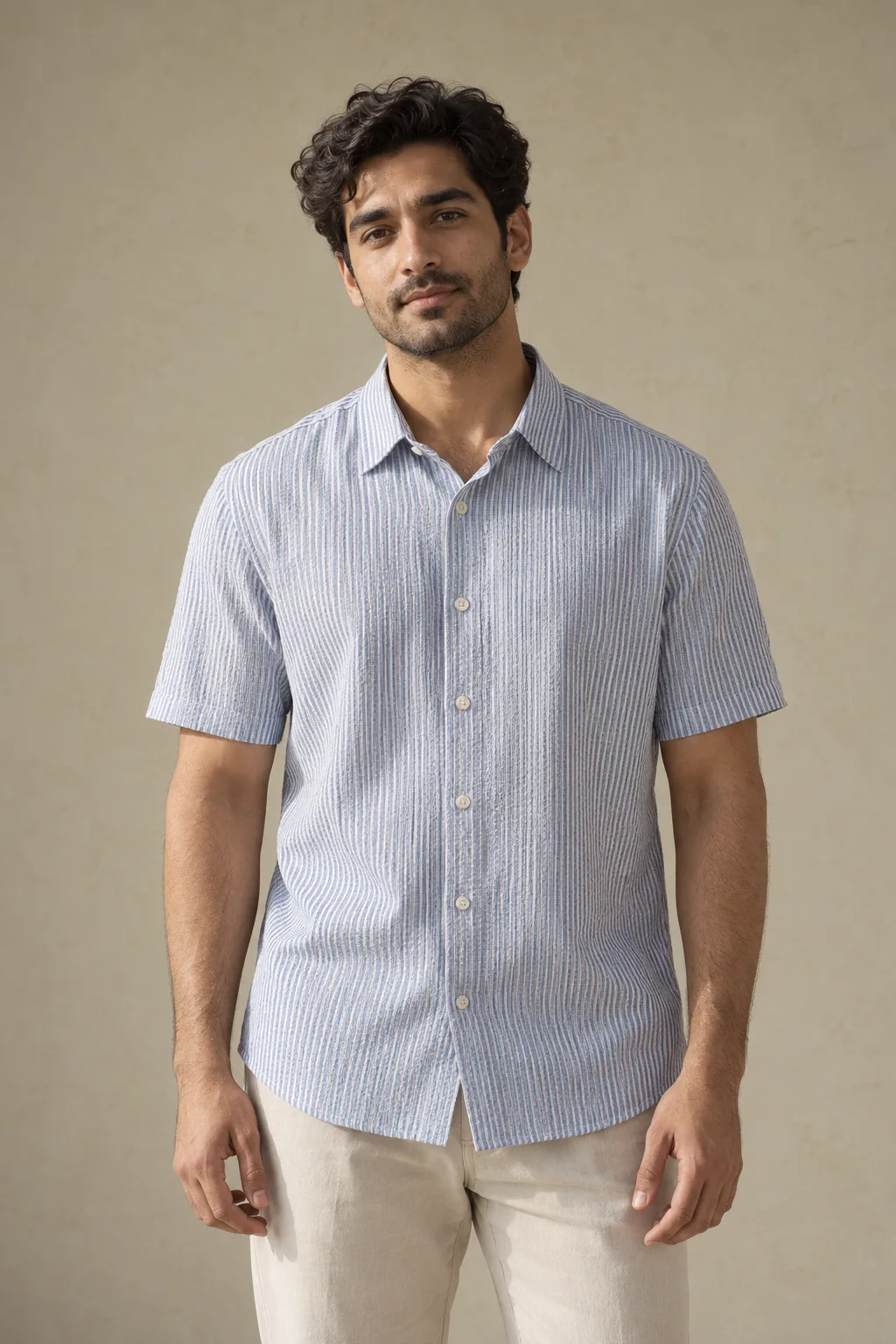
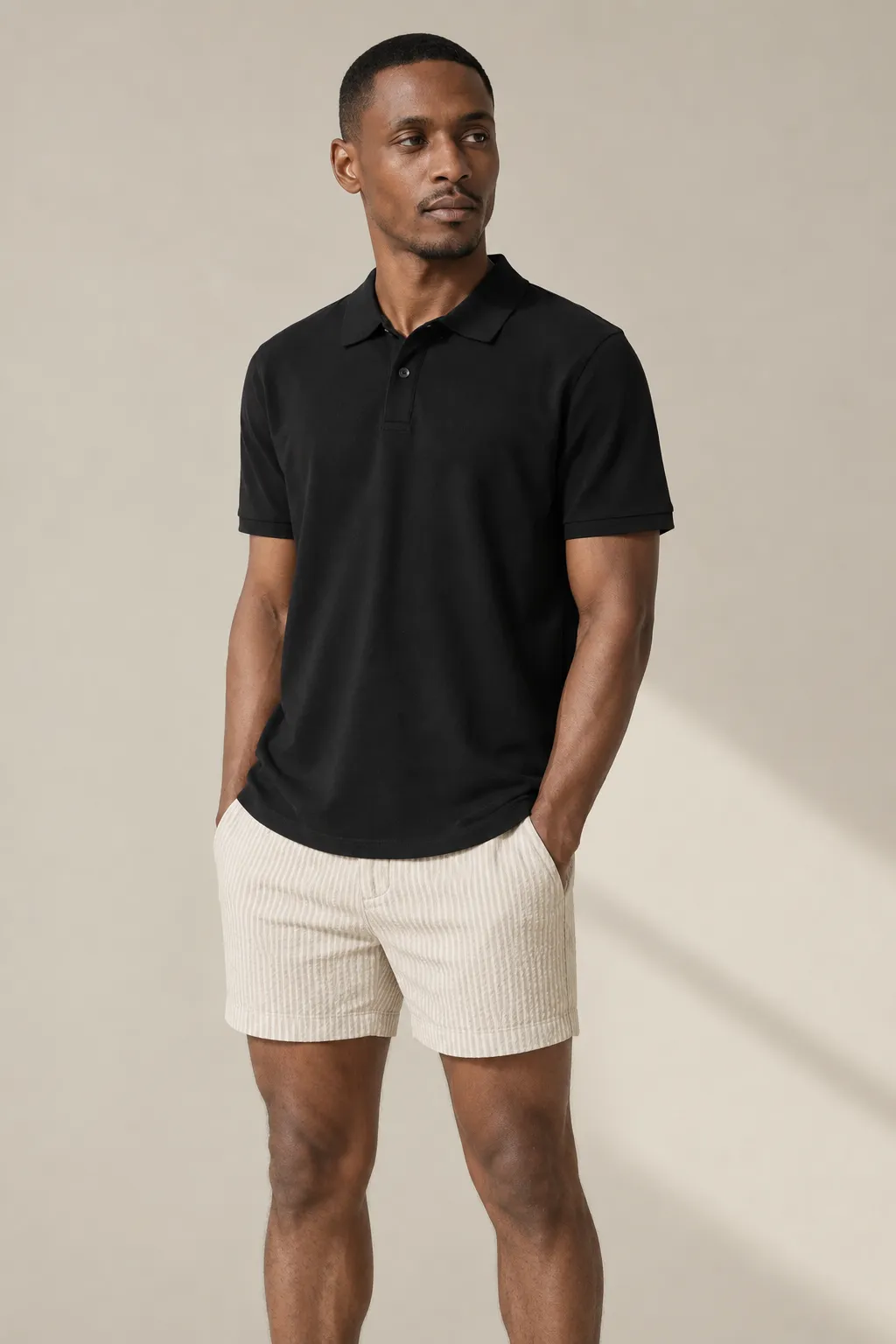
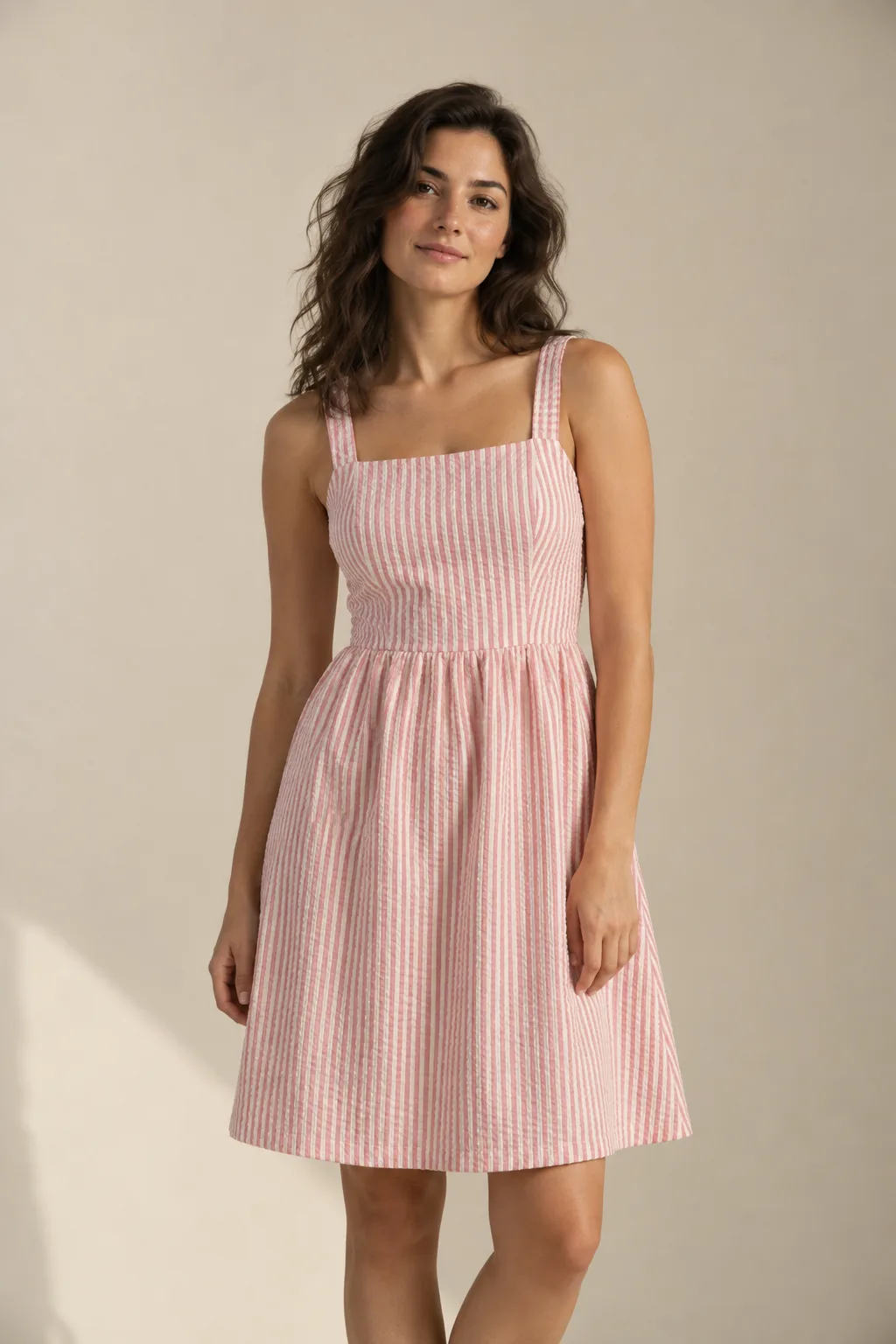
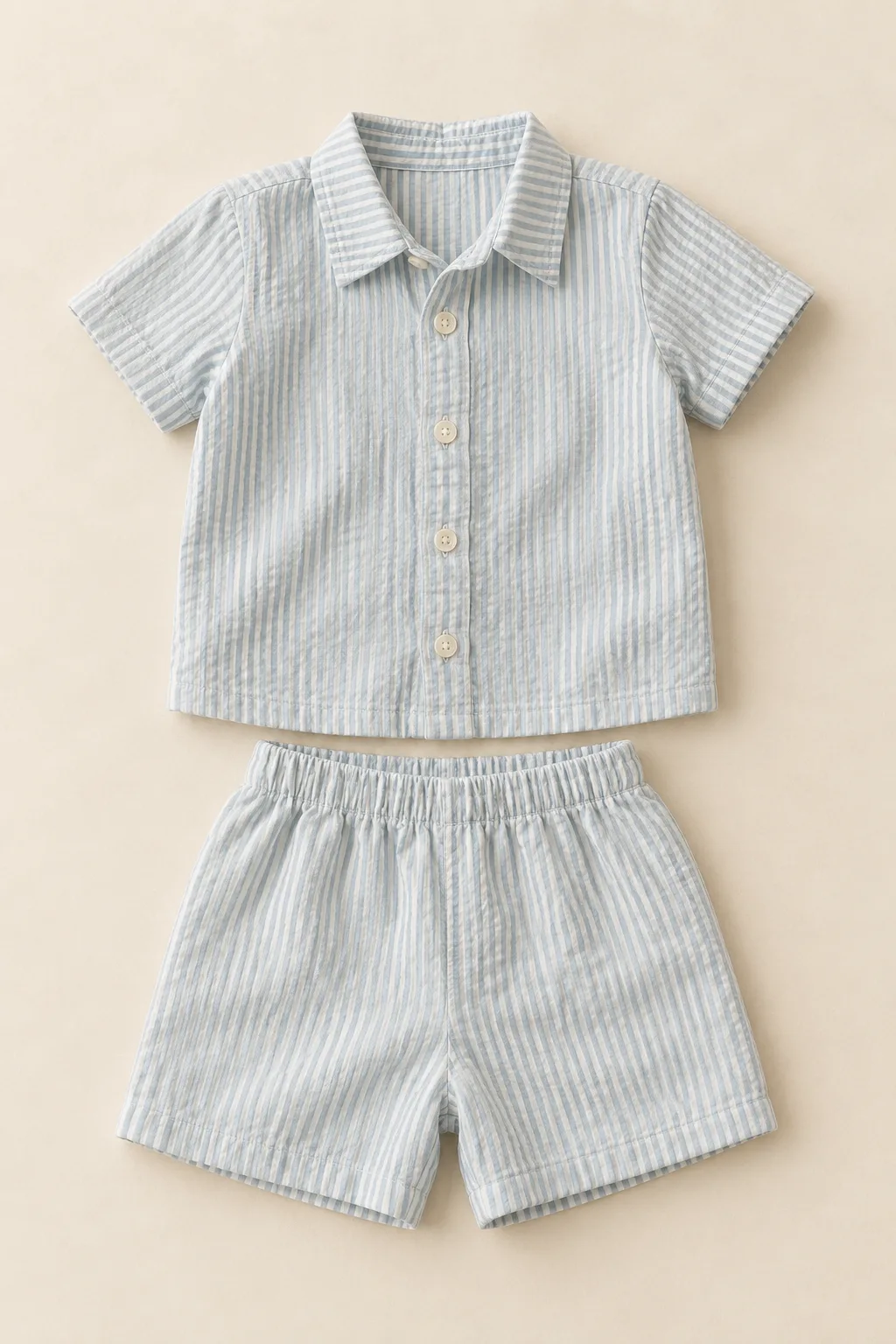
Have a style in mind? Send a reference garment and the quantity, and we quote it in seersucker.
Request a similar style→A cotton seersucker check from the catalogue
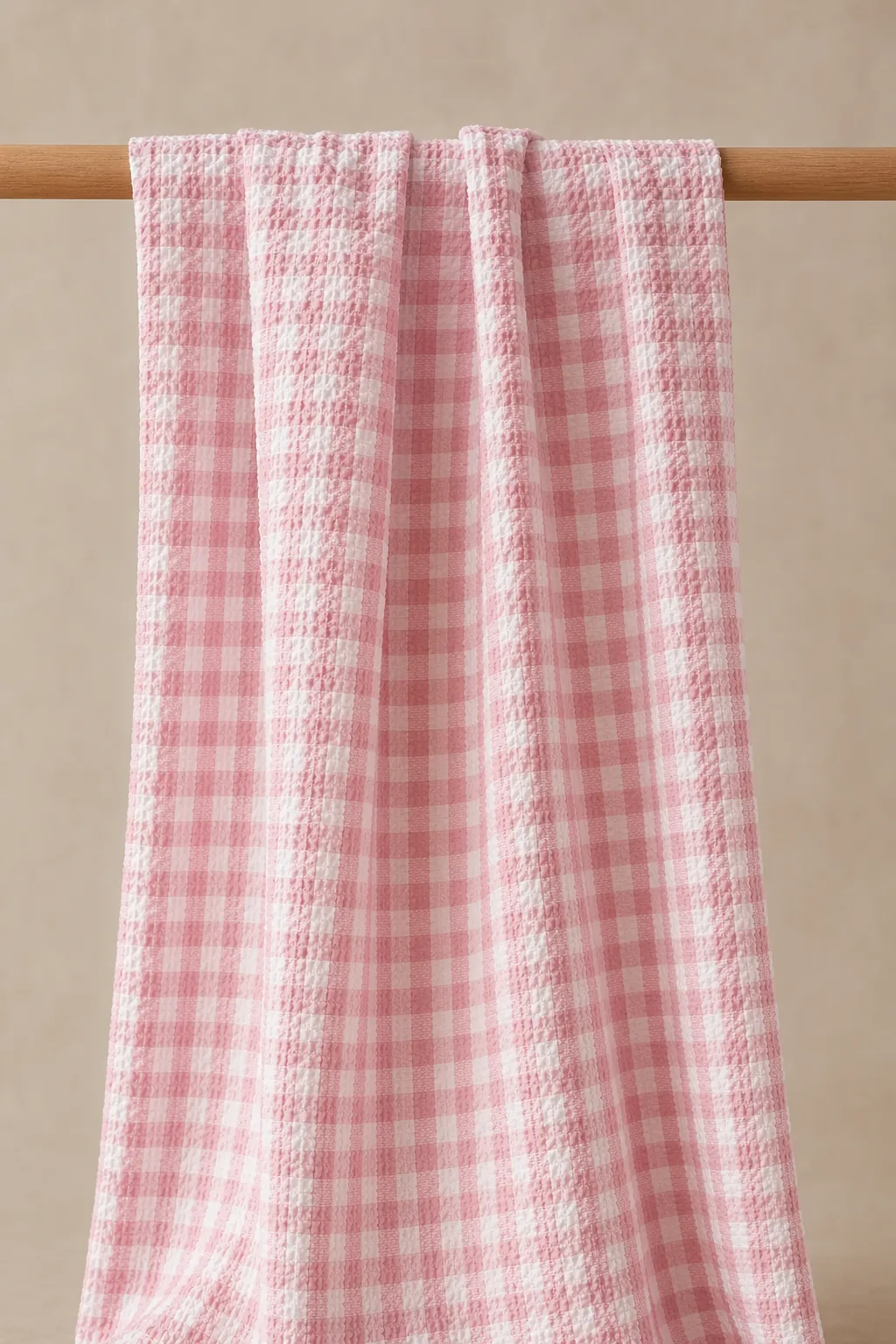
Enquire about a similar cotton check
For a fabric like this pink check, send the repeat and colours required, with the quantity in metres and target price.
Seersucker vs poplin: puckered or flat
Poplin
Poplin is a flat woven cloth, giving a shirt a smooth surface.
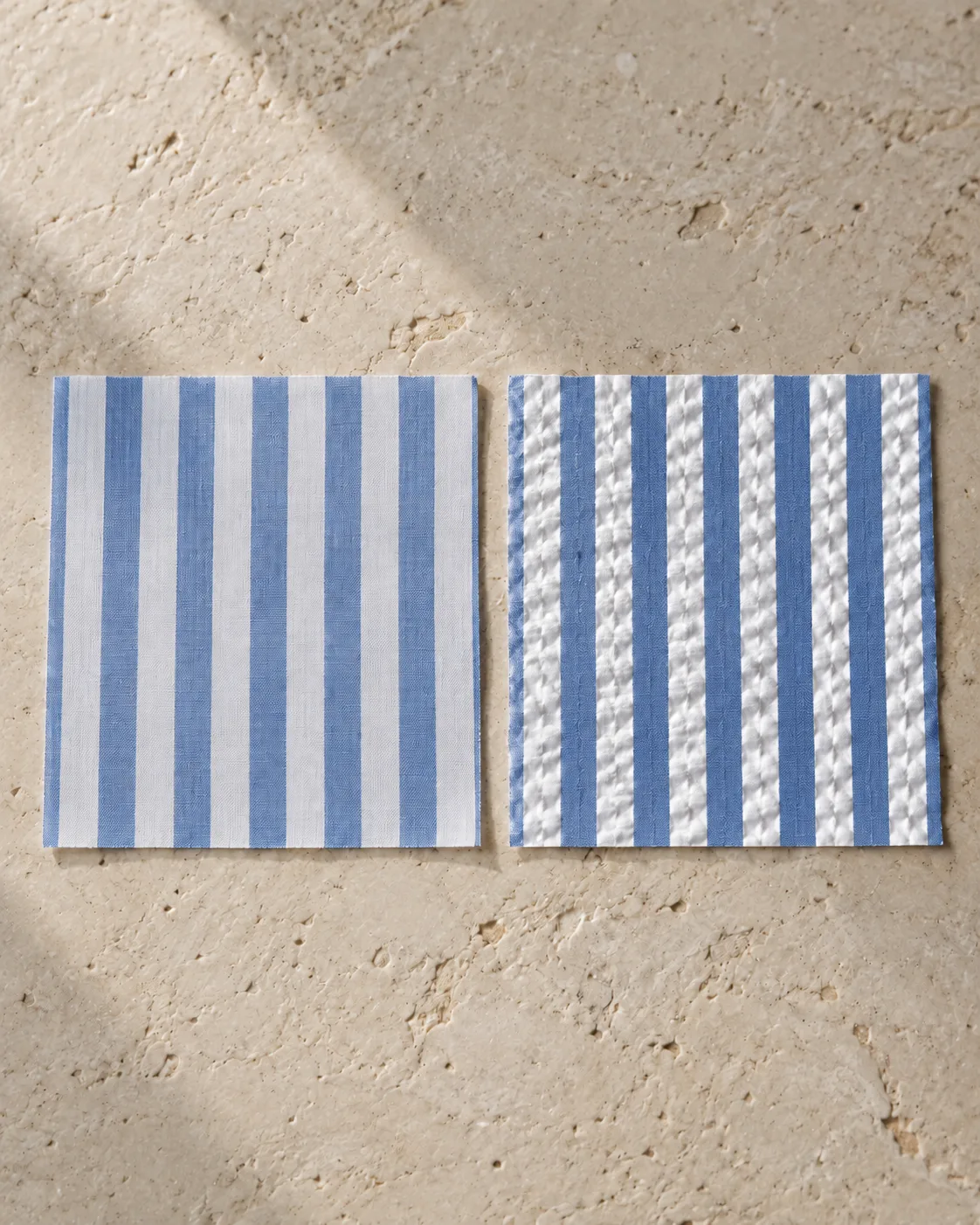
Seersucker
Traditional slack-tension seersucker has raised bands along the warp, giving the garment a puckered look.
Pinstripe names very narrow, closely spaced stripes, which can be woven or printed. Specify the stripe pattern separately from the cloth’s surface; see yarn dyeing.
Specifying seersucker on a tech pack
We source other seersucker variants to your brief.
- Supply item and style
- Name the garment or fabric required and attach the style reference.
- Fibre content
- List each fibre and its percentage.
- Finished GSM and usable width
- State the target weight in g/m² and usable width in centimetres.
- Yarn counts
- Give each warp count and the weft count.
- Ends and picks
- Specify the warp and weft thread counts, with their units.
- Colours and repeat
- Include the colour references and the stripe or check repeat dimensions.
- Pucker reference
- Attach a fabric reference for the required texture.
- Finish and care
- State the finish and care cycle, with the required dimensions and appearance after care.
- Quantity per colourway
- Give garment quantities in pieces or fabric quantities in metres.
Not sure of every line? Tell us what you are planning, and we will advise on what works best.
Send this as a brief→Tests for seersucker fabric and garments
| Test | Method | What it shows |
|---|---|---|
| Dimensional change[1] | ISO 5077 | Change in fabric or garment dimensions after specified washing and drying. |
| Fabric mass[2] | ISO 3801 | Mass per unit area of woven fabric. |
| Thread count[3] | ISO 7211-2 | Number of threads per centimetre in woven cloth. |
| Tensile strength[4] | ISO 13934-1 | Maximum force and elongation at that force, using a fabric strip. |
| Pilling[5] | ISO 12945-2 | Resistance to surface pilling, fuzzing and matting by the modified Martindale method. |
Common questions about seersucker
Is seersucker always 100% cotton?
No. Seersucker can contain a blend of fibres. Specify the composition separately, with each fibre’s percentage.
What GSM should we specify for seersucker?
Specify the finished weight for the garment. GSM means grams per square metre; use the GSM calculator with your fabric measurements.
Do you supply seersucker fabric as well as garments?
Yes. We supply seersucker fabric on its own, by the metre.
Is seersucker the same as linen?
No. Linen is made from flax fibre taken from the plant’s stem.
How do I get a seersucker fabric price?
We quote against the required construction and finish, with the metres per colourway and target price. A stripe or check reference gives us the pattern to cost.
A question this does not answer? Ask us directly and we reply within 24 hours.
Planning a seersucker range?
Send the range’s styles and colourways, with quantities for each. We reply within 24 hours.
Discuss your requirement→