

Surajmal Shobhachand supplies satin fabric by the metre and satin garments from India, including slip dresses, blouses and nightwear.
Long floats in the weave give satin its lustrous face. Specify the fibre or blend as well as the weave.
Satin garments we supply


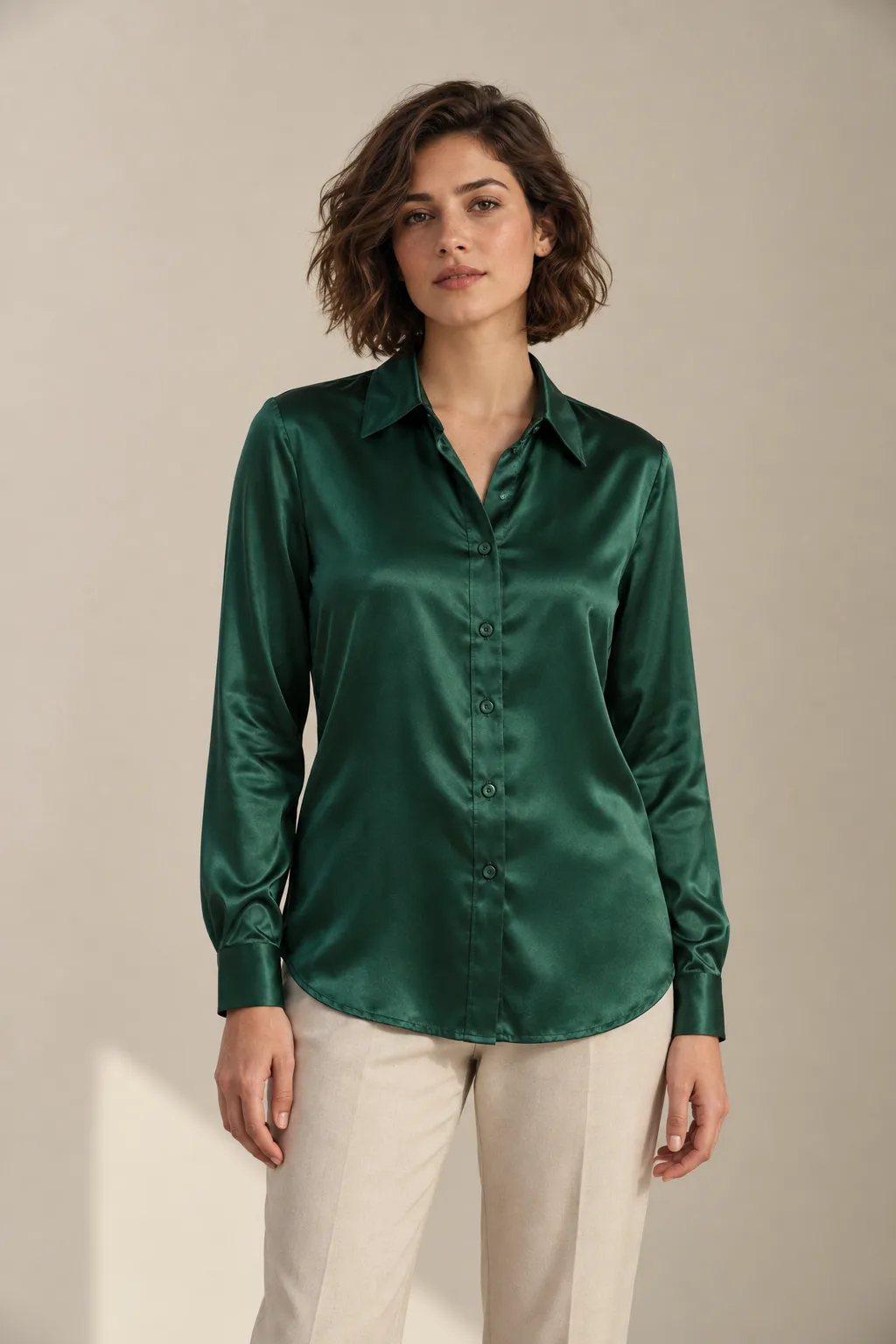
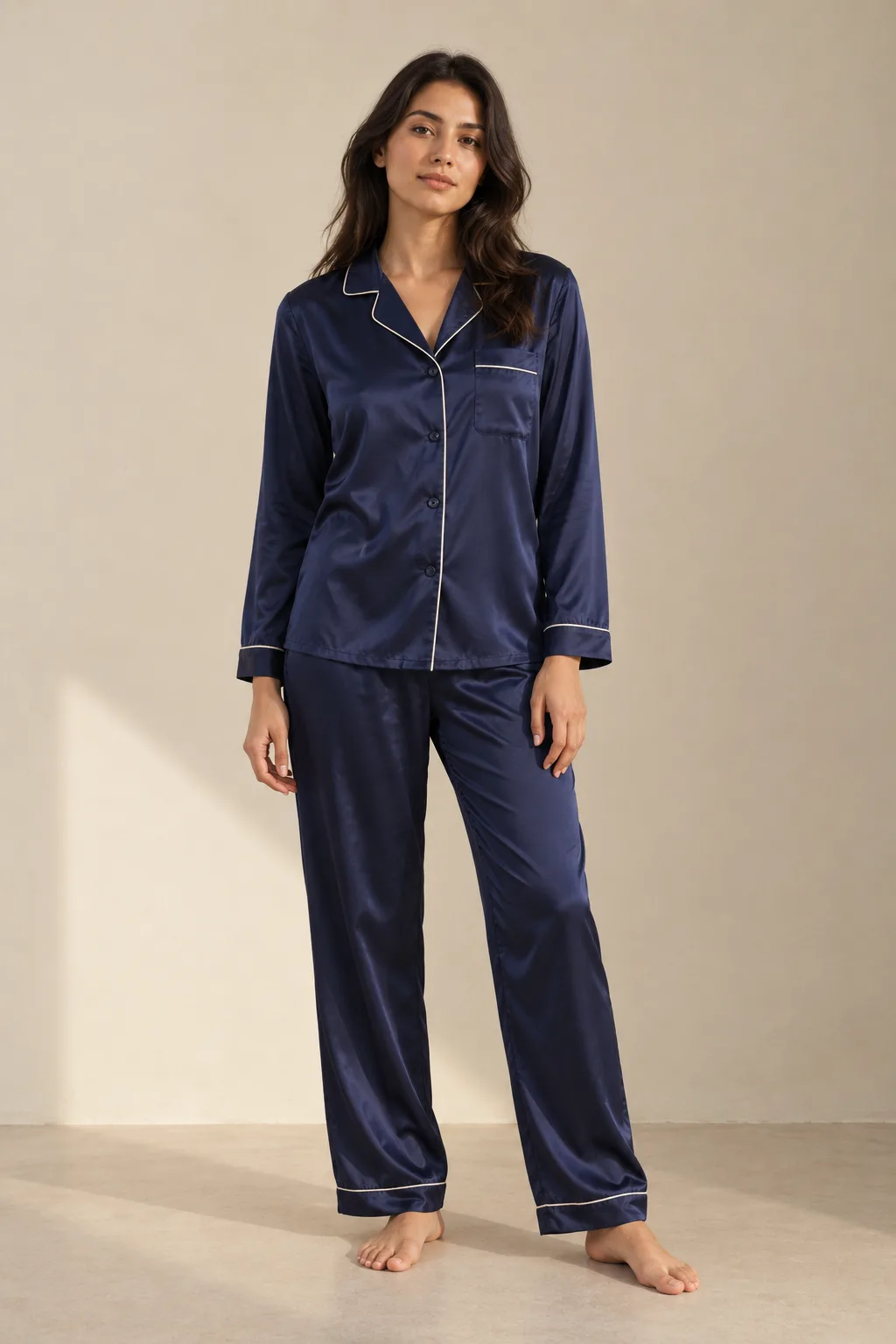
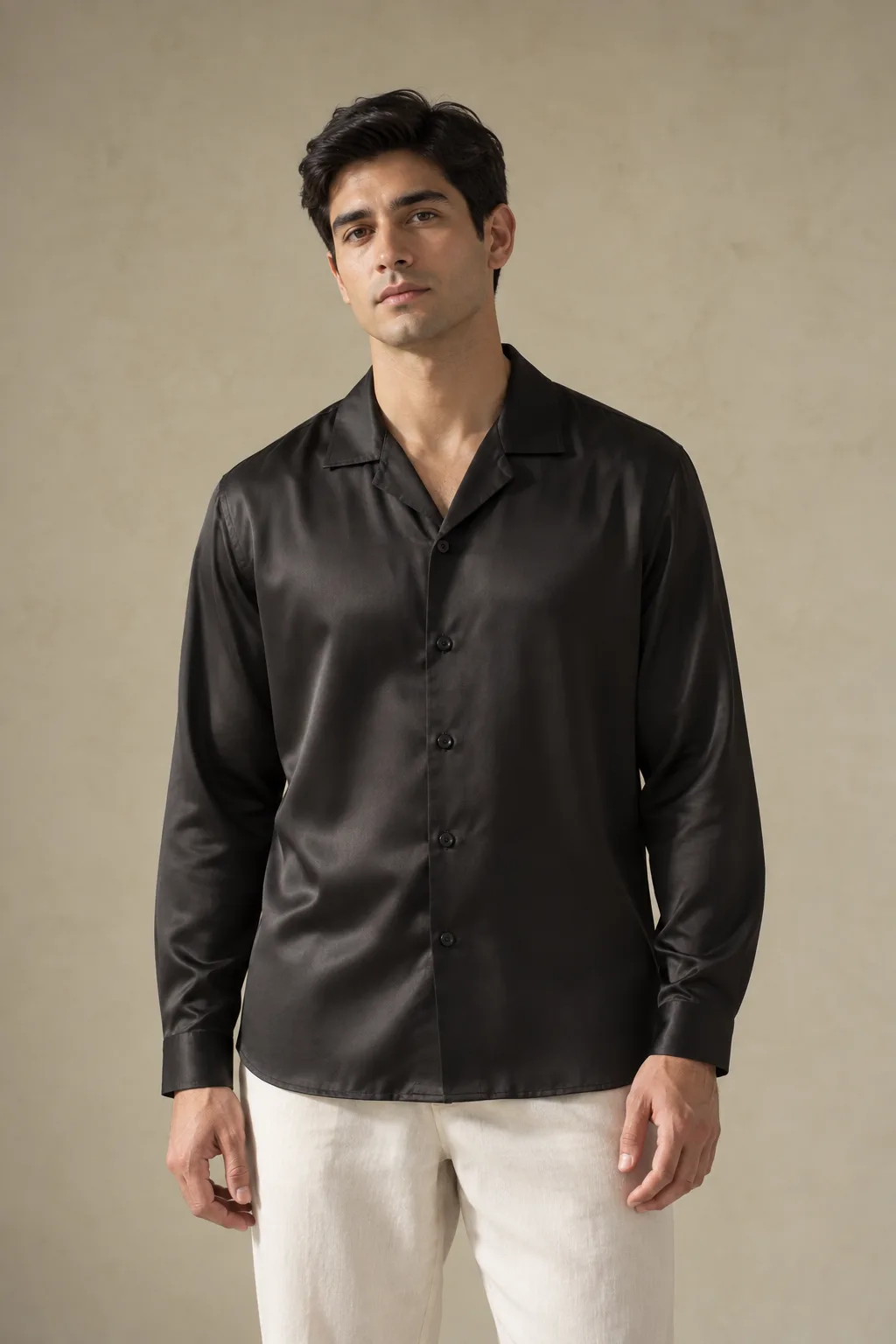
Have a style in mind? Send a reference garment and the quantity, and we quote it in satin.
Request a similar style→Smooth satin or crepe-back satin?
Smooth satin
Smooth satin gives the garment a soft, smooth surface.
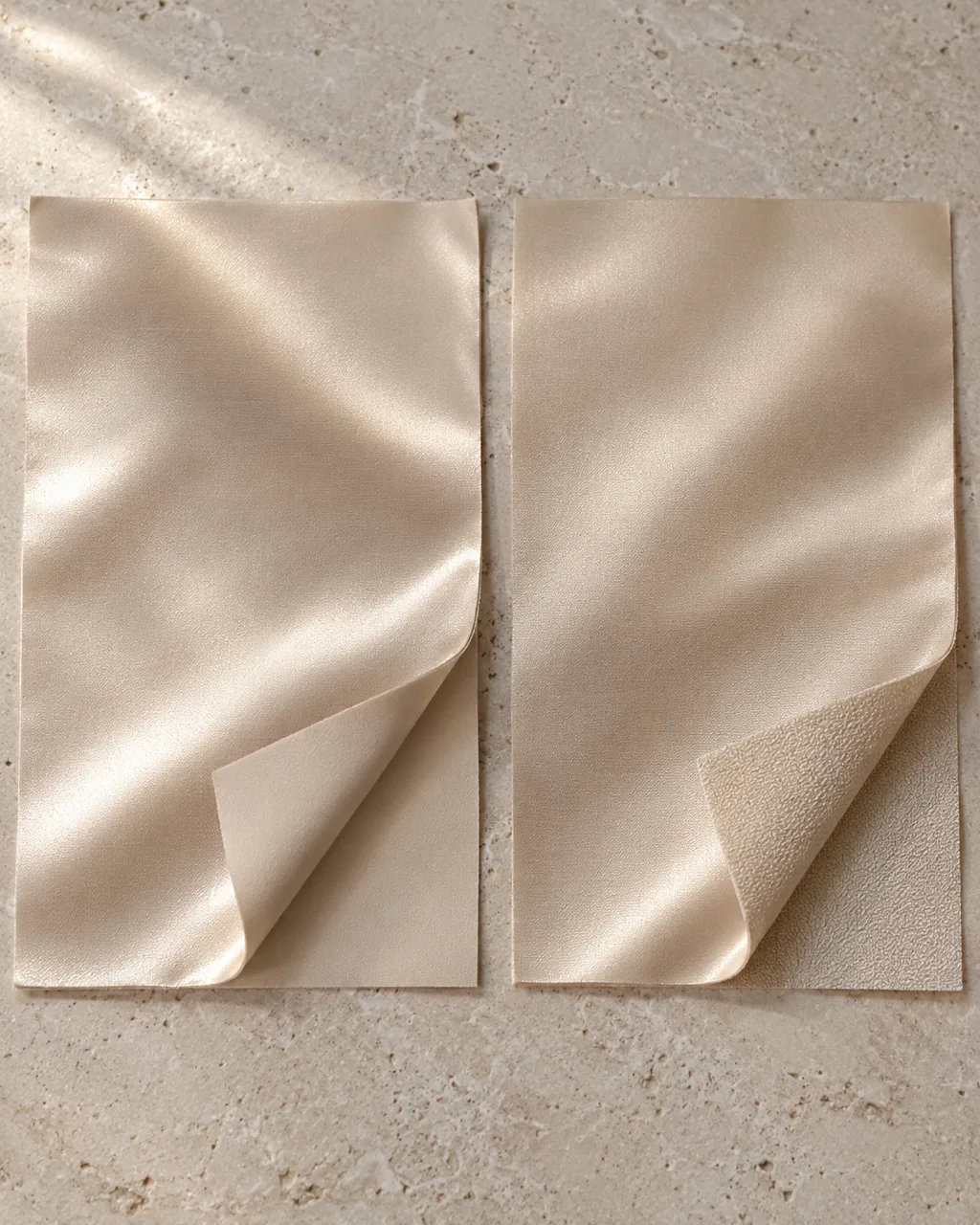
Crepe-back satin
Crepe-back satin has a satin-weave face and a textured crepe reverse. State which surface faces out.
Specify the surface for the body of the garment and any contrasting details.
Enquire about satin fabric
Send a fabric reference with the composition, finished GSM, usable width and metres required for a quote.
Specifying satin on a tech pack
- Garment or fabric
- Name the garment or fabric quality and give the quantity in pieces or metres.
- Fibre content
- List each fibre and its percentage.
- Quality and weave
- Name the quality. For warp-faced satin, the long floats run in the warp direction; for filling-faced satin, they run in the weft.
- Thread count
- State the warp and weft threads per centimetre, measured under ISO 7211-2.[1]
- Finished GSM
- Give the finished mass per unit area in g/m², measured under ISO 3801.[2]
- Usable width
- Give the usable fabric width.
- Finish and colour
- Include a reference for the sheen and hand. State the finish and shade.
- Intended care
- Set out the washing, drying and pressing conditions.
- Result after care
- State the required shade, sheen and hand after care, with limits for dimensional change.
Not sure of every line? Tell us what you are planning, and we will advise on what works best.
Send this as a brief→Tests for satin fabric and garments
Set the acceptance limits and laundering conditions for the selected quality.
| Test | Method | What it measures |
|---|---|---|
| Seam slippage[3][4] | ISO 13936-2 or ISO 13936-1 | Resistance of woven threads to slippage at a sewn seam, at a fixed load or a fixed seam opening. |
| Fabric skew after washing[5] | AATCC TM179 | Change in fabric skew after home laundering. |
| Pilling[6] | ISO 12945-2 | Resistance to pilling, fuzzing and matting by the modified Martindale method. |
| Tensile strength[7] | ISO 13934-1 | Maximum force and elongation at maximum force by the strip method. |
| Colourfastness to rubbing[8] | ISO 105-X12 | Colourfastness under dry and wet rubbing. |
| Colourfastness to washing[9] | ISO 105-C06 | Colour loss and staining, with a single (S) test approximating one laundering. |
| Garment dimensional change[10] | AATCC TM150 | Length and width changes of garments after home laundering. |
| Garment appearance after washing[11] | AATCC TM143 | Smoothness of the garment and its seams, with crease retention. |
Common questions about satin
Is satin the same as silk?
No. Silk is a natural protein fibre; satin is a weave.
Is polyester satin real satin?
Yes. Polyester satin is made with filament yarns.
What is cotton satin?
Cotton satin is called sateen: cotton fabric in a satin weave.
What GSM should we specify for satin garments?
Specify the finished weight for the garment with the fibre percentages and finish. Use the GSM calculator for the calculation.
Can we order satin fabric without garments?
Yes. Send the quality reference and required metres for a fabric-only quotation.
How long does a satin sample take?
The first garment sample takes 4 to 10 days after we agree the brief. Bulk takes from 35 days after sample approval.
A question this does not answer? Ask us directly and we reply within 24 hours.
Planning a satin range?
Share the styles for the range, quantities and target price. We reply within 24 hours.
Discuss your requirement→