

Surajmal Shobhachand supplies Kantha garments and fabric sold separately by the metre from India.
Kantha is running-stitch embroidery that originated in West Bengal.
Kantha garments we supply
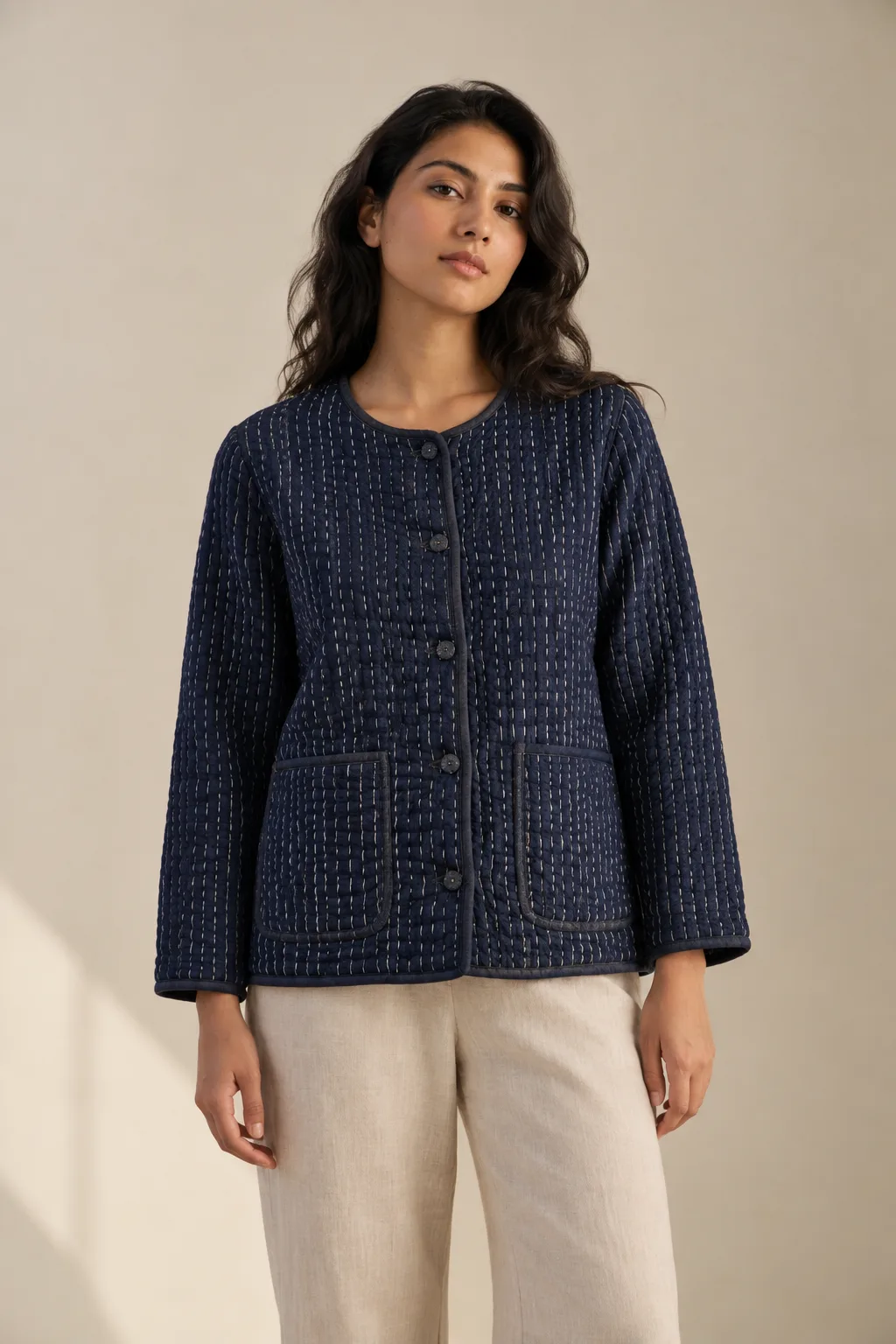
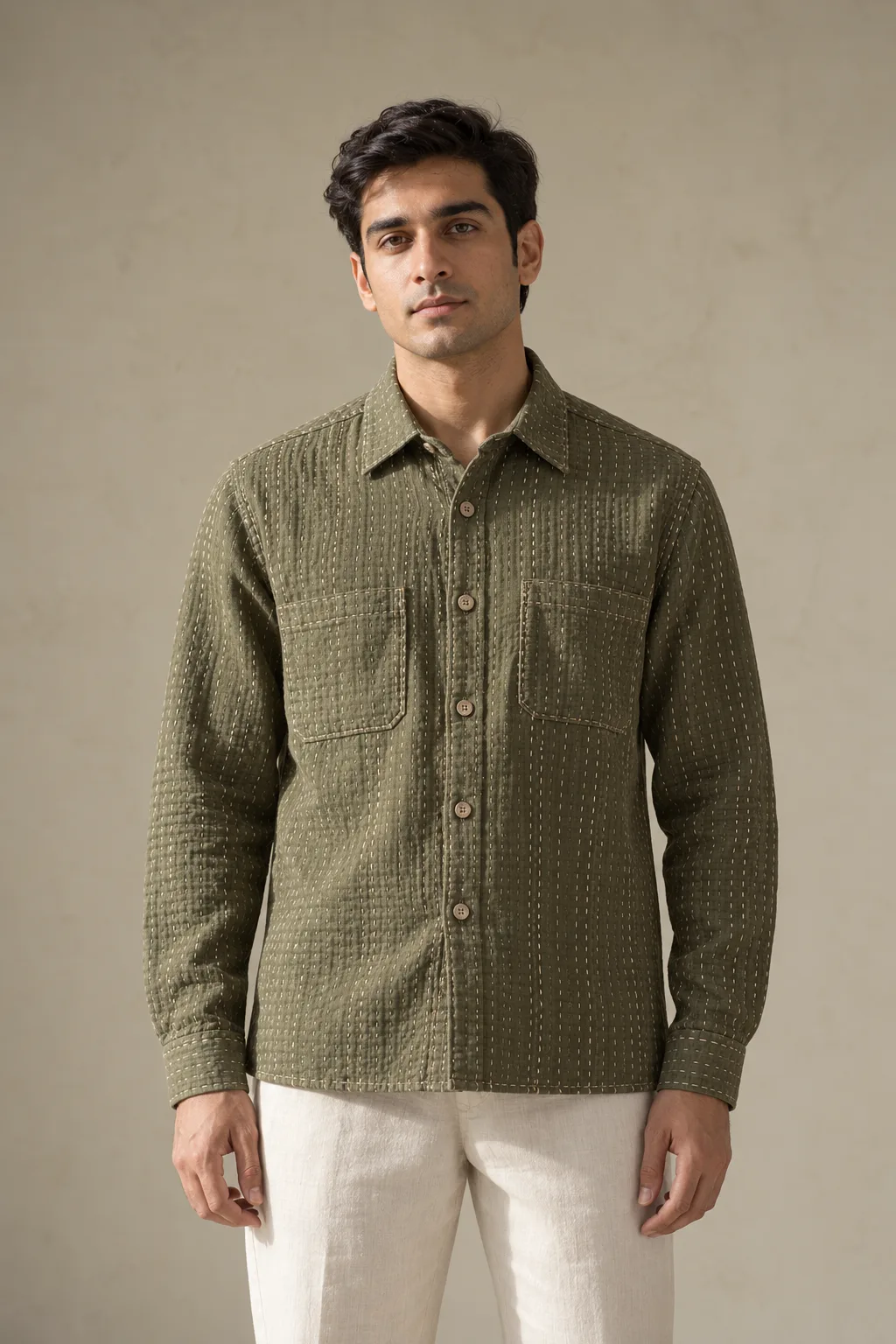
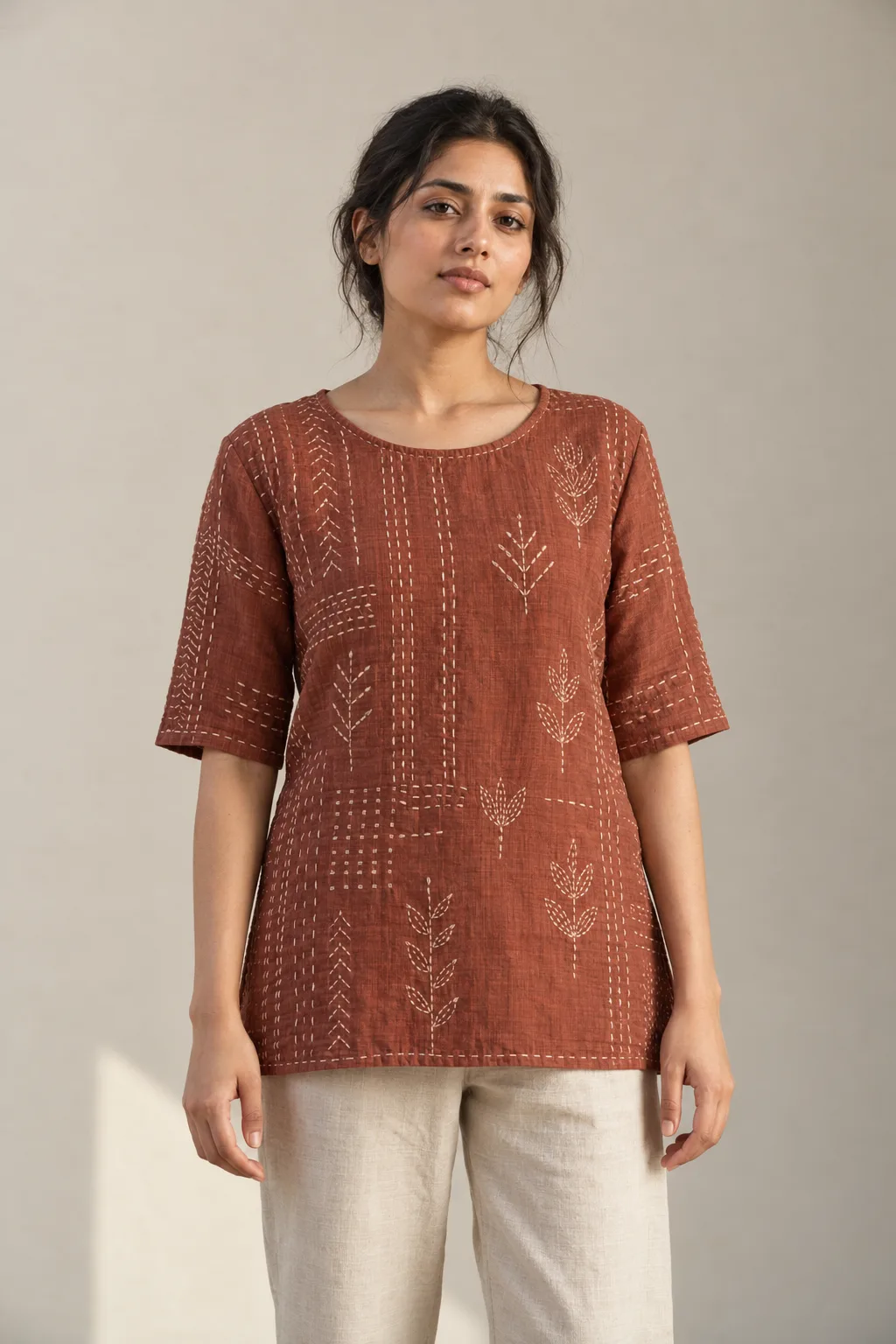
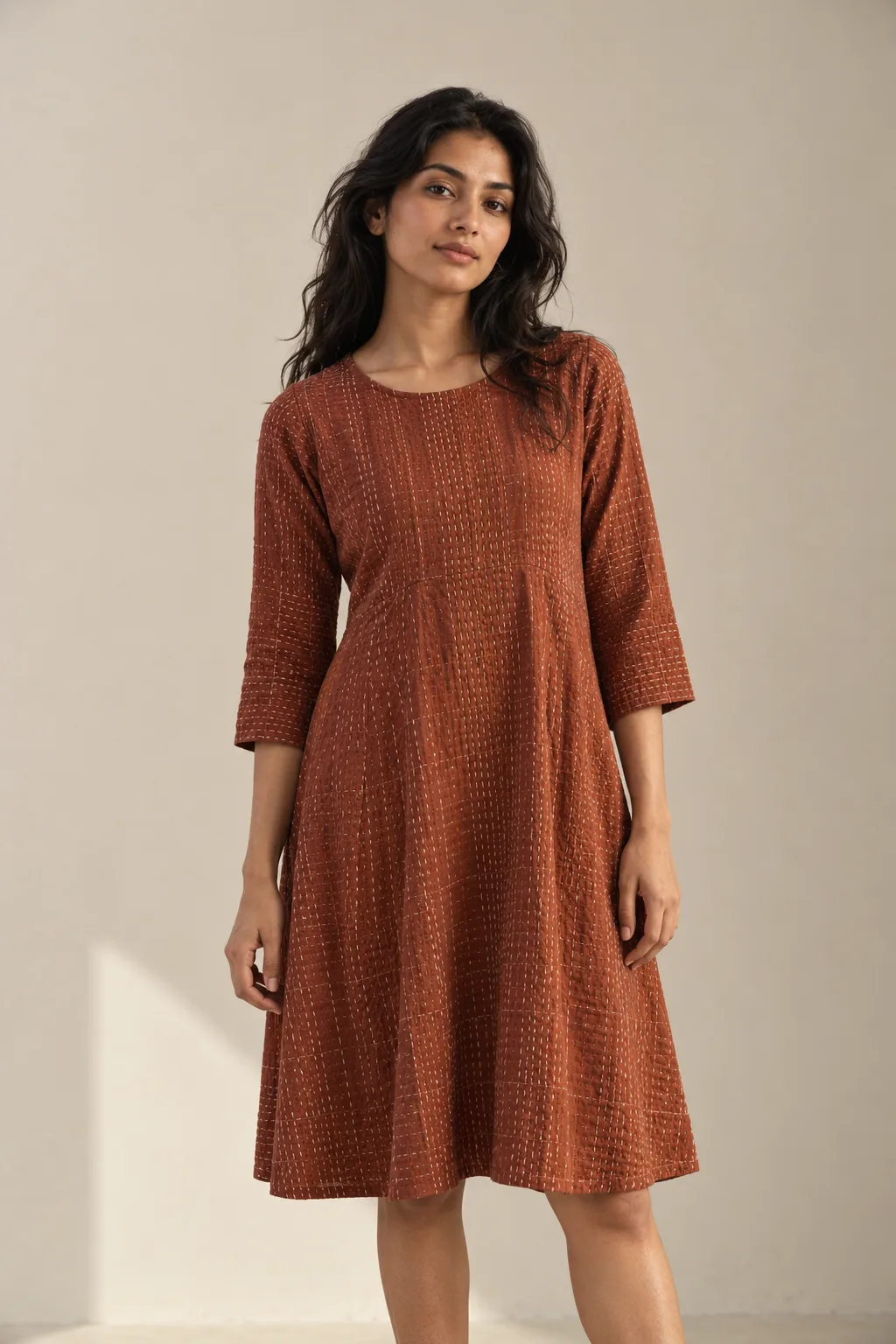
Have a style in mind? Send a reference garment and the quantity, and we quote it with Kantha stitching.
Request a similar style→Layered or single-layer Kantha
Layered
Running stitches join several cloth layers into a quilted construction.
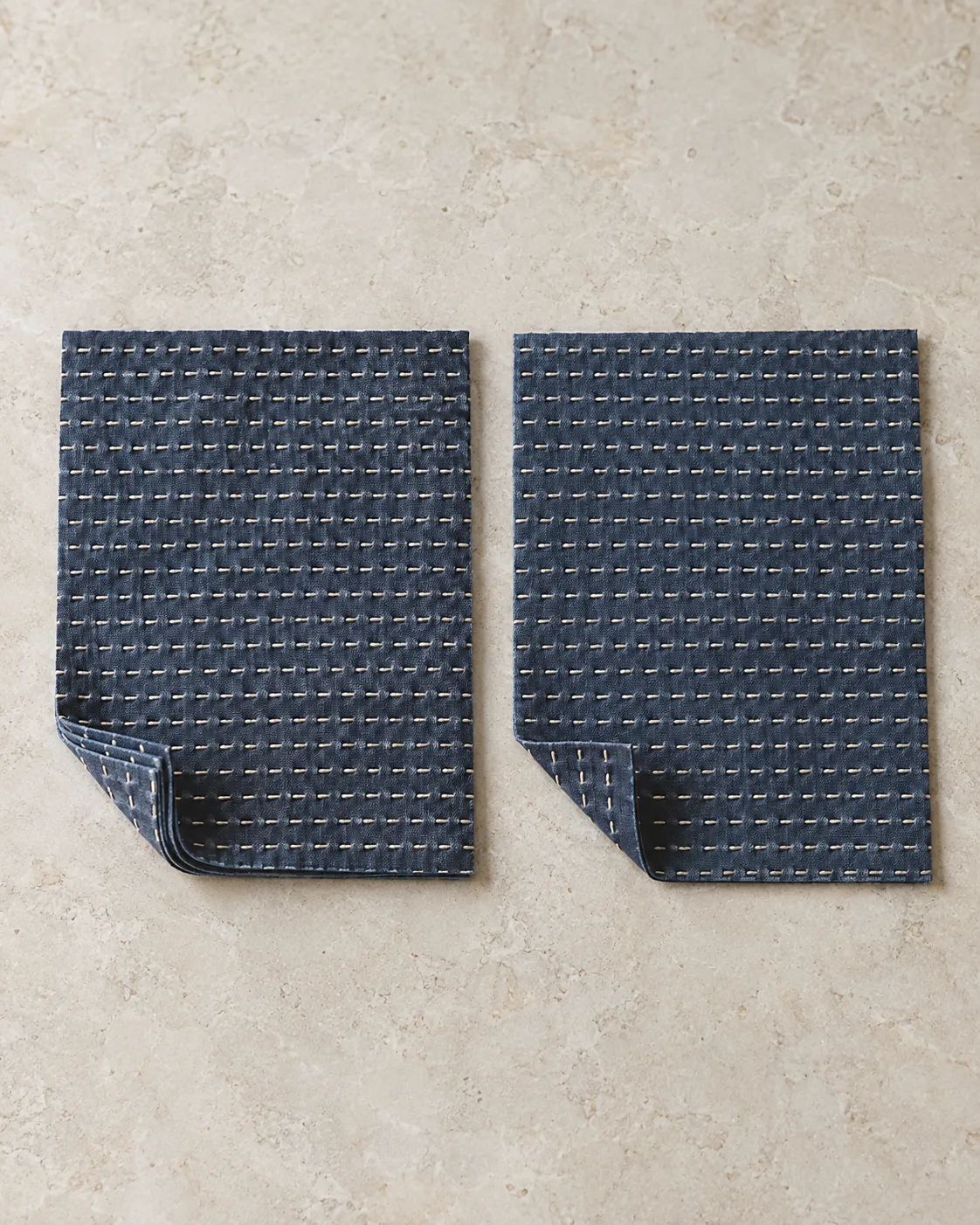
Single layer
One layer of white or coloured cloth forms the ground for the embroidery.
Specify the layer count separately from the stitch coverage.
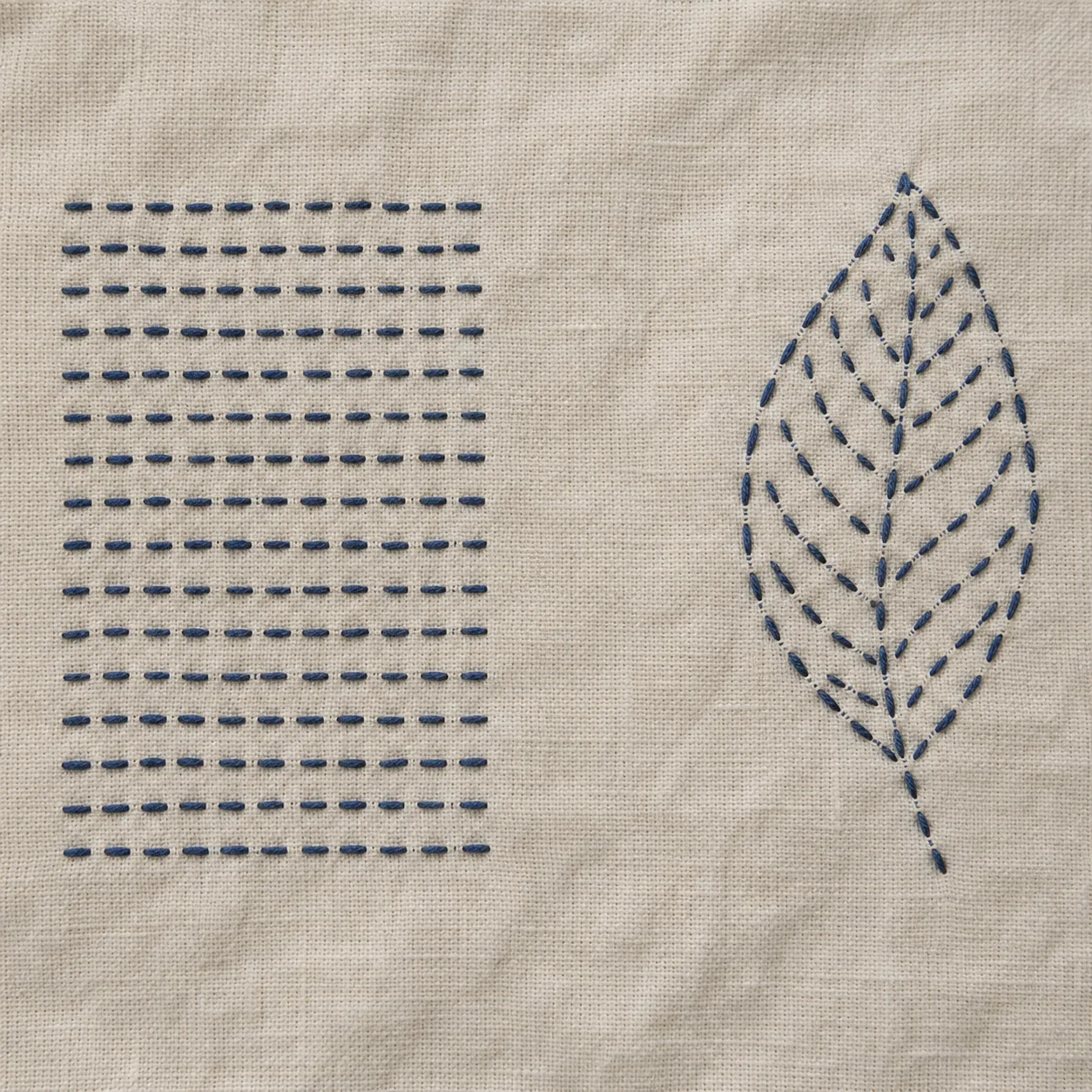
Running-stitch coverage
Running stitches pass up and down through the cloth, leaving gaps between stitches. Specify their length and row spacing against a reference, with the areas to leave unstitched marked on the artwork.
Quote your Kantha motif on a garment
Send the motif artwork, a reference garment or tech pack, a stitching reference and the quantity. We quote the Kantha garment in your colour, with the coverage and finish you specify.
How a Kantha motif is stitched
- 1
Trace
Transfer the motif to the cloth with tracing paper and carbon.
- 2
Outline
Stitch the design outlines first.
- 3
Fill
Fill the outlined areas with running stitches.
Specifying Kantha on a tech pack
- Layer construction
- Choose a single layer or layered cloth. Give the number of layers for layered work.
- Ground fabric
- State the composition, construction, GSM and colour. Light and medium cotton or silk suit Kantha work. See cotton and poplin for ground cloth options.
- Artwork and motif dimensions
- Attach a line drawing and give the finished motif width and height.
- Stitch and row spacing
- Include a reference for stitch length, gaps and the distance between rows. Mark outline, fill and unstitched areas.
- Thread colours
- Give a colour reference for each thread.
- Placement
- Mark motif positions and measurements on the garment drawing, or specify all-over coverage.
- Reverse and edge finish
- Include a reference for the reverse appearance and garment edge finish.
- Care requirements
- State the intended care instructions and required tests.
- Garment sizes and quantities
- Give the size range and quantities per colourway.
- Fabric width and metres
- For fabric supplied on its own, give the required width and length in metres. See fabrics for cloth supply.
Not sure of every line? Tell us what you are planning, and we will advise on what works best.
Send this as a brief→Tests for Kantha garments
| Test | Method | What it measures |
|---|---|---|
| Colourfastness to washing[1] | ISO 105-C06 | Colour loss and staining after a single (S) test, an approximation of one domestic or commercial laundering. |
| Colourfastness to rubbing[2] | AATCC TM8 | Colour transfer to white test cloth under dry and water-wet rubbing. |
| Fabric dimensional change[3] | AATCC TM135 | Changes in fabric length and width after home laundering. |
| Fabric smoothness[4] | AATCC TM124 | Smoothness appearance of fabric after home laundering. |
Common questions about kantha
Do you supply wholesale Kantha clothing for brands?
Yes. We make to your design and label, from garment development through to bulk. See private label for the garment programme.
Can we buy Kantha fabric without ordering garments?
Yes. We supply Kantha fabric on its own, by the metre, to garment makers.
What do you need for a Kantha clothing quote?
We quote from the garment drawing, ground-fabric specification and embroidery artwork. Include the coverage reference and quantities by size.
Is Kantha the same as sashiko or boro?
No. Sashiko is a Japanese running-stitch technique for mending and reinforcing fabric. Boro describes Japanese textiles worn and mended repeatedly. Name the technique and attach a stitching reference to the brief.
A question this does not answer? Ask us directly and we reply within 24 hours.
Developing a Kantha range?
Send the styles for the collection, with colourways and quantities for each. We reply within 24 hours.
Discuss your requirement→