

Surajmal Shobhachand supplies tie-dye T-shirts, hoodies, lounge sets and kidswear from India. We also supply finished tie-dyed fabric on its own, by the metre.
Tie-dye is a resist technique. Bound areas of cloth or garments resist the dye.
Tie-dye garments we supply
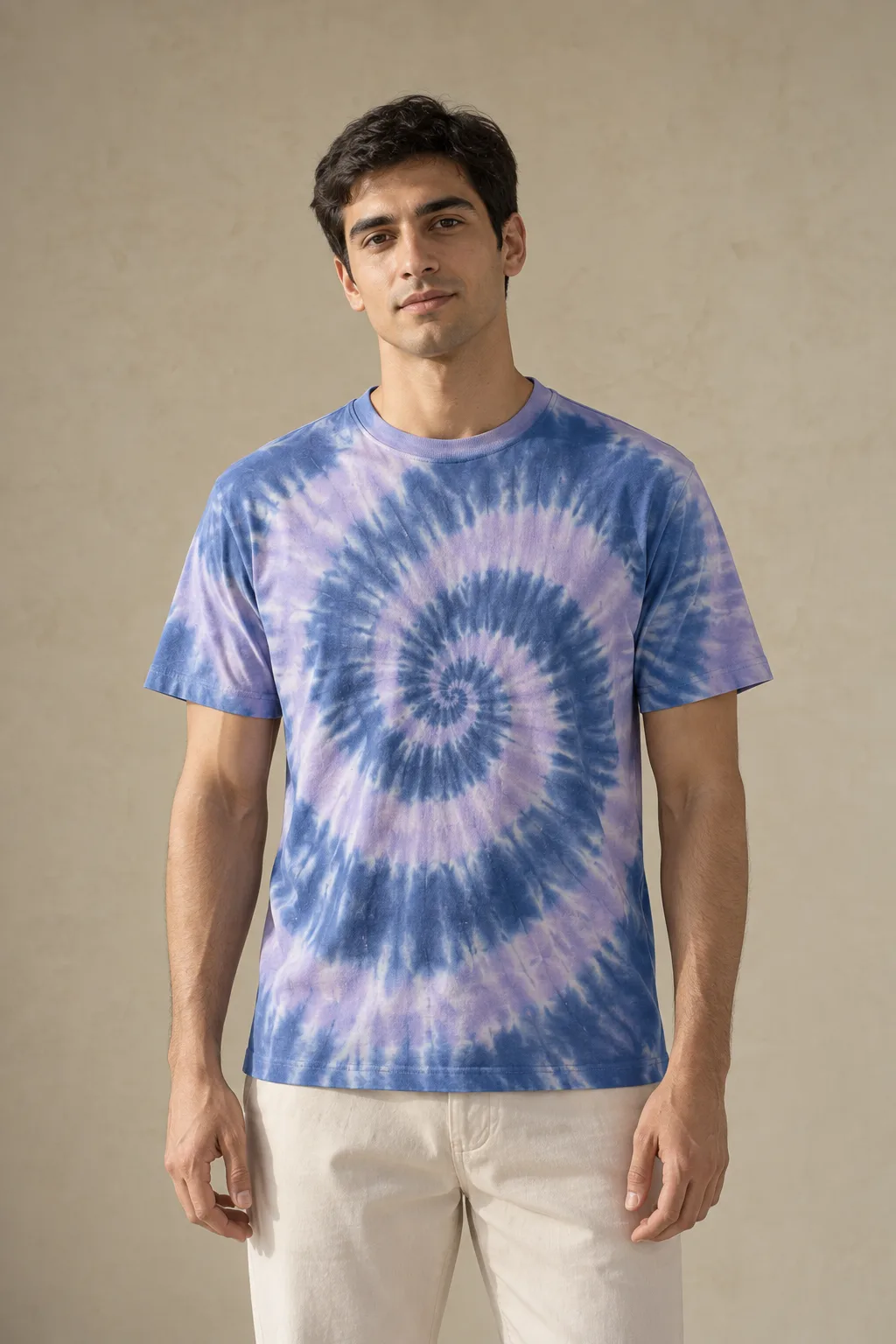
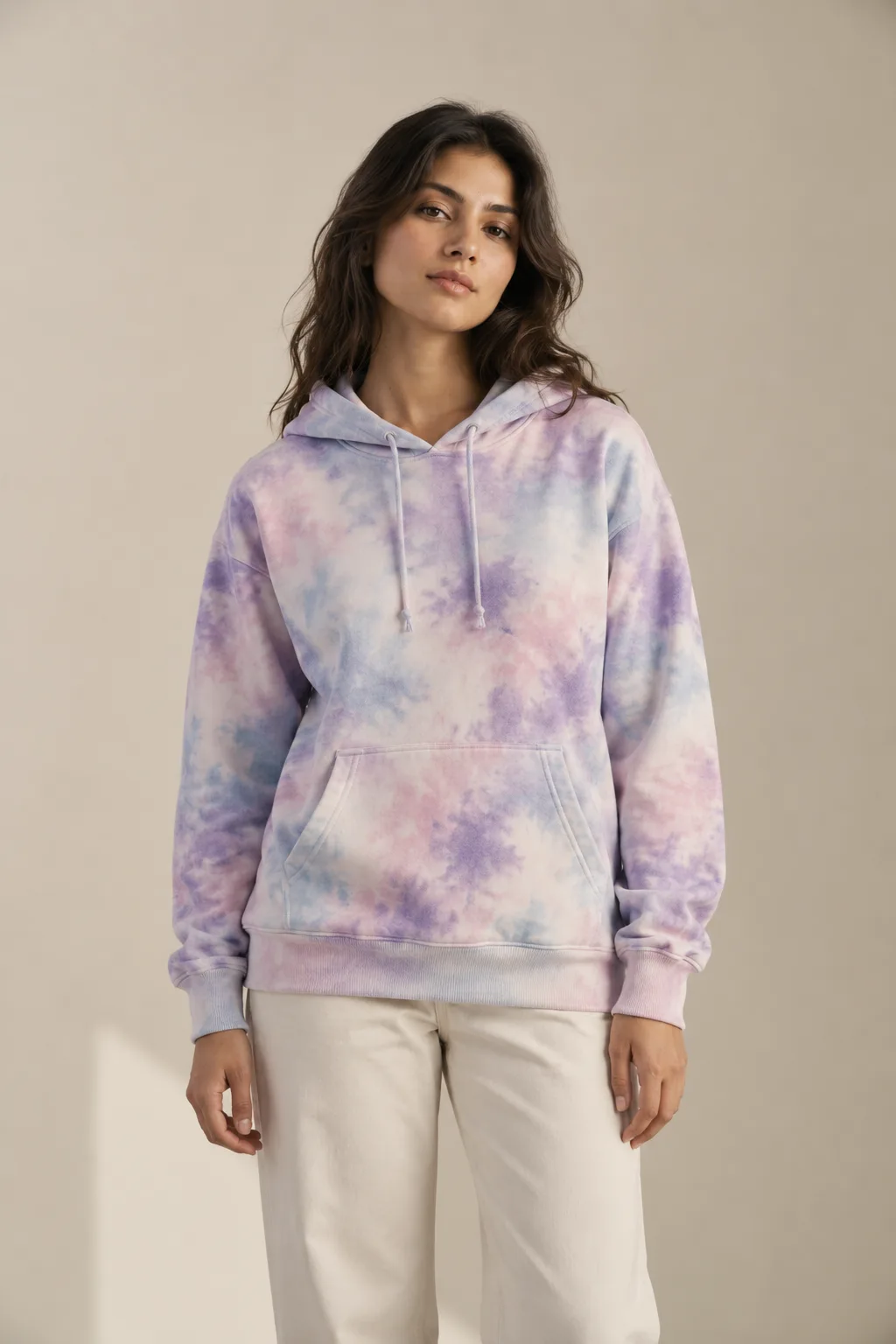
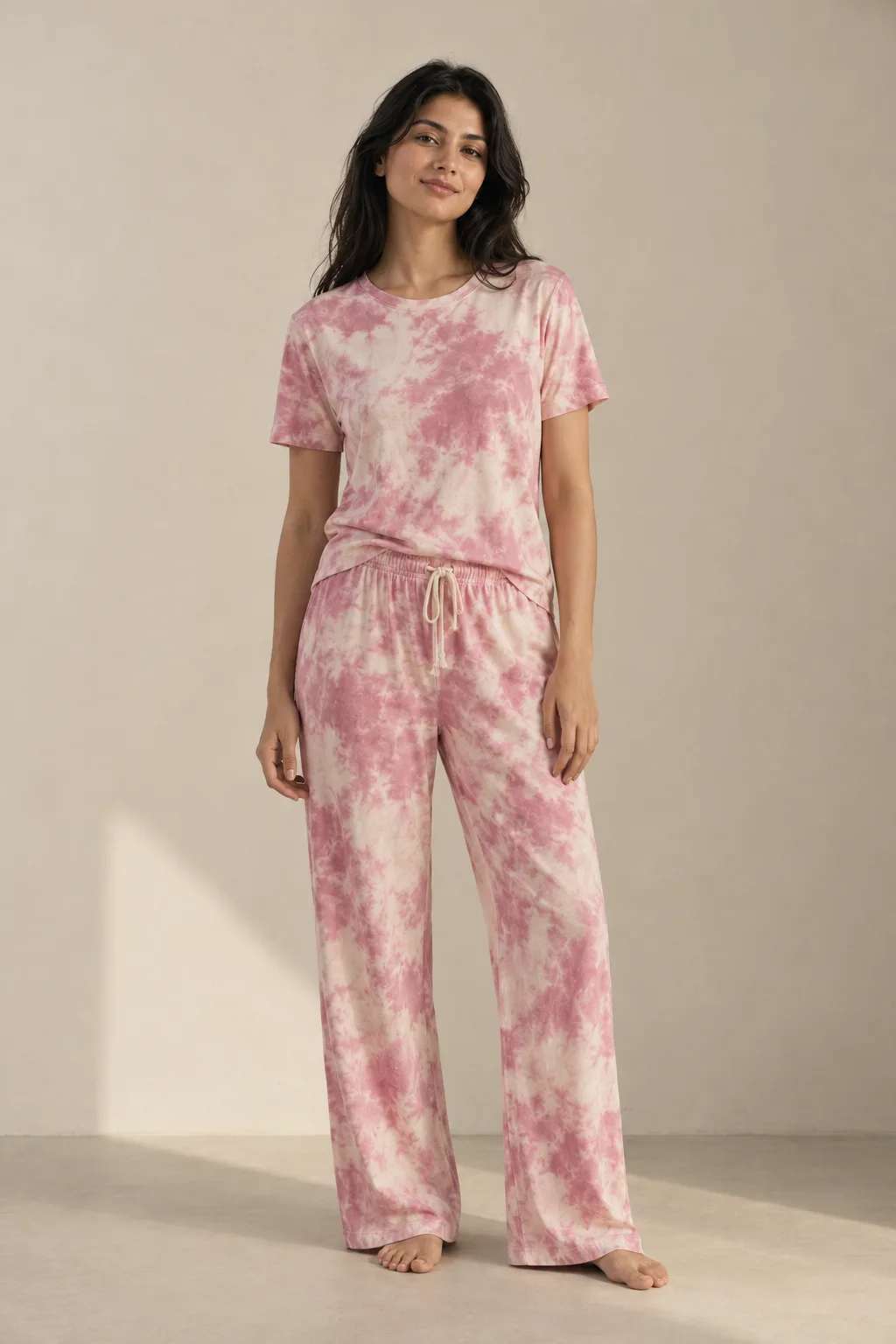
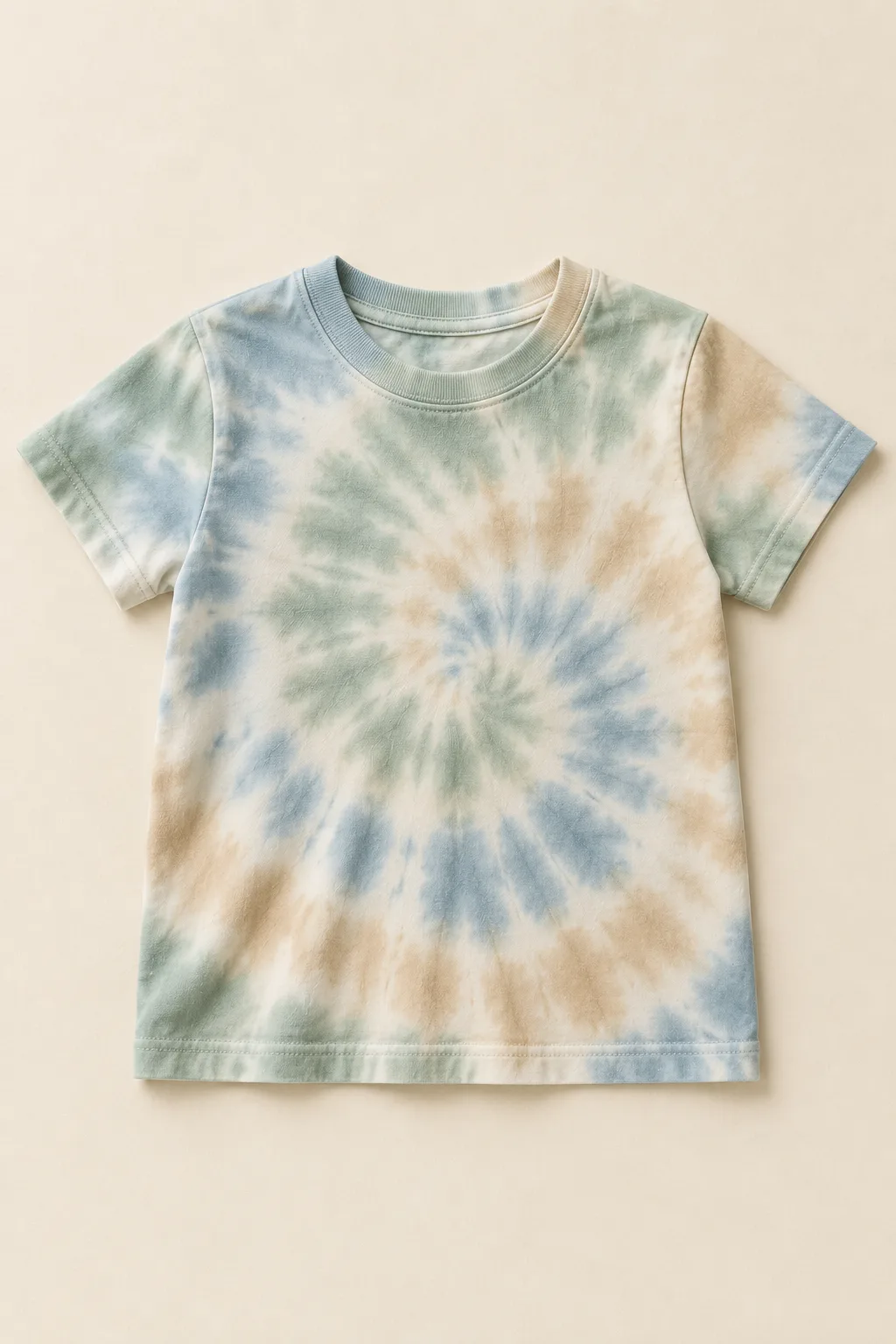
Have a style in mind? Send a reference garment and the quantity, and we quote it with tie-dye.
Request a similar style→Spiral or crumple
Spiral
Twisting the cloth into a spiral gives curved bands around a chosen centre.
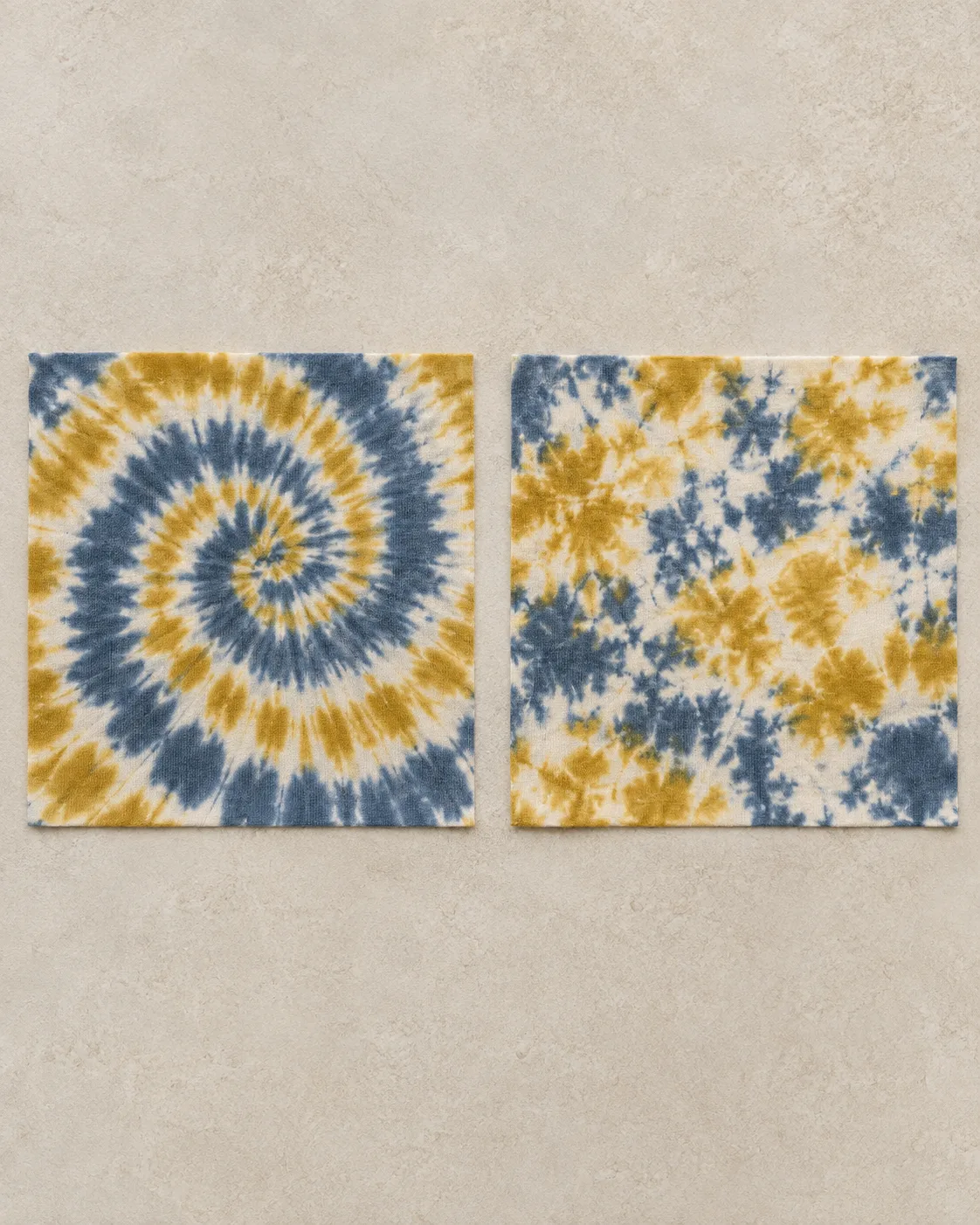
Crumple
Random gathering gives scattered colour patches for an all-over mottled look.
Name the pattern on the garment drawing.
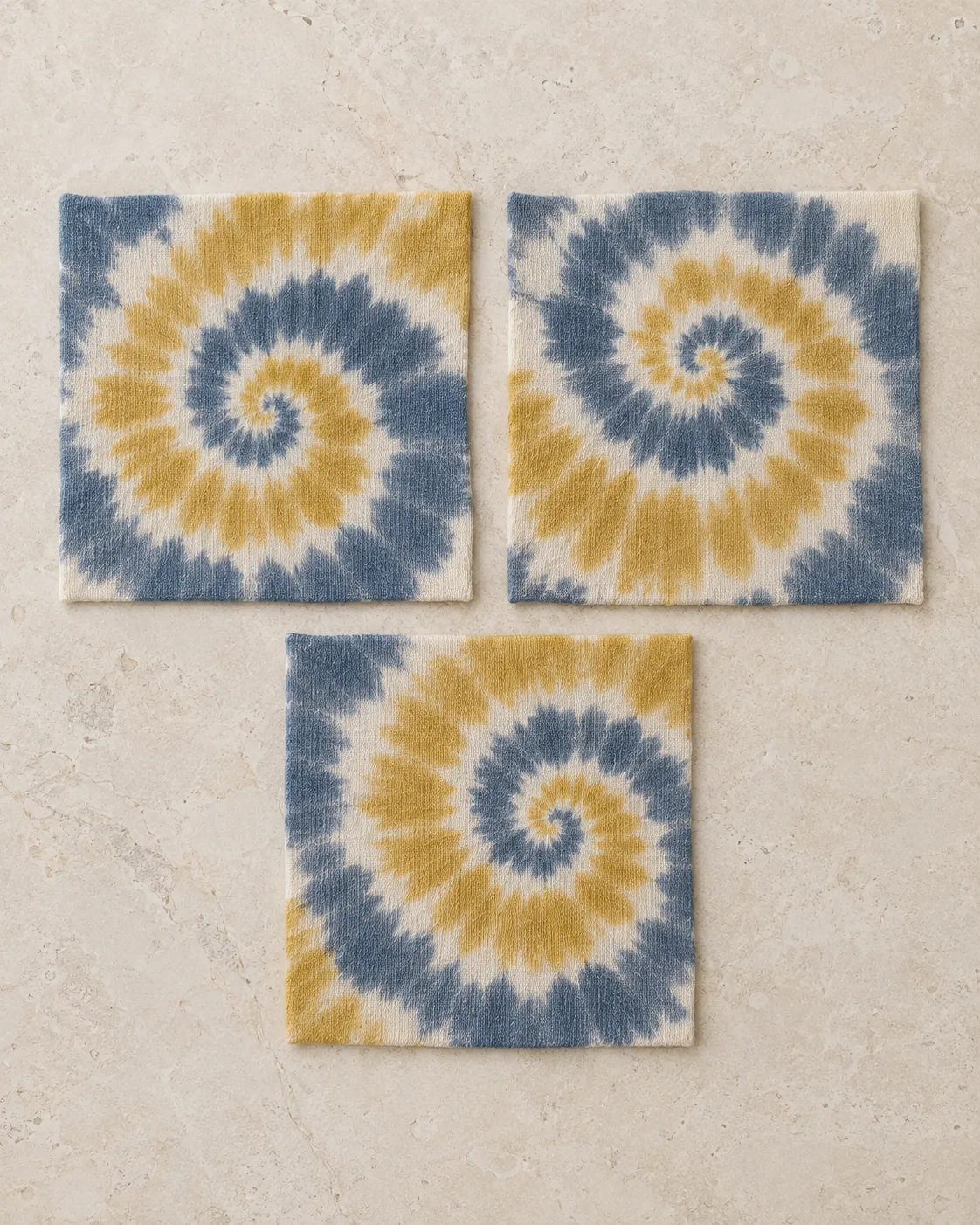
Agree the look with several references
Use two or three reference pieces to agree the colour balance and undyed areas. Mark the motif position on a garment drawing.
Quote a garment with the chosen tie-dye look
Send a reference garment or tech pack, the pattern reference, palette and quantity. We quote the garment with your chosen tie-dye look.
Specifying tie-dye on a tech pack
- Garment or fabric
- Name the garment and reference style, or specify fabric by the metre.
- Fibre content and GSM
- Give the fibre percentages, construction and weight in grams per square metre. See cotton for base fabric choices.
- Starting shade
- State the shade before dyeing. White or off-white cloth takes dye colours more clearly than coloured cloth.
- Pattern reference
- Name spiral, crumple, stripe or another pattern and attach its reference.
- Colours
- List the colours with a reference for each shade.
- Placement
- Give measurements for any placed motif, including the spiral centre. Specify an all-over pattern where required.
- Reference pieces
- Attach links or photographs of the pieces used to agree the look.
- Size range
- List the garment sizes required.
- Quantity per colourway
- State the quantity for each garment size. For fabric, give the width and metres needed.
Not sure of every line? Tell us what you are planning, and we will advise on what works best.
Send this as a brief→Binding, dyeing and opening the pattern
- 1
Bind
The garment is tied or folded to form the chosen pattern.
- 2
Dye
Dye is applied while the garment is bound.
- 3
Rinse, then open
The tied bundle is rinsed in clean water after each dyeing, before the ties are removed.
Tests for tie-dye garments
| Test | Method | What it measures |
|---|---|---|
| Colourfastness to washing[1] | ISO 105-C06 | Colourfastness under domestic and commercial laundering conditions. |
| Accelerated laundering[2] | AATCC TM61 | Fabric colour loss and surface changes in a 45-minute test, roughly approximating five home or hand launderings. |
| Colourfastness to rubbing[3][4] | ISO 105-X12 or AATCC TM8 | Colour transfer to a white rubbing cloth under dry and wet conditions. |
| Fabric dimensional change[5] | AATCC TM135 | Length and width change of fabric after home laundering. |
Common questions about tie-dye
Can I buy finished tie-dyed fabric on its own?
Yes. Send the fabric reference, width, GSM and metres required for a fabric quote.
Will lighter tie-dye colours show on a black T-shirt?
No. Lighter dye colours will not show on cloth already dyed a dark shade.
Can polyester be tie-dyed with cold-water dye?
No. Cold-water dyes do not dye polyester well.
How is tie-dye different from bandhani?
Bandhani, also called bandhej, uses fine thread ties and dyeing in stages with different colours.
How is tie-dye different from batik?
In batik, wax is applied to the cloth before dyeing.
How are shibori and tie-dye related?
Arashi shibori is one form of tie-dye.
A question this does not answer? Ask us directly and we reply within 24 hours.
Planning a tie-dye range?
Send the styles, colourways and quantities for your collection. We reply within 24 hours.
Discuss your requirement→